

Testing and quality control solutions for waste classification, regulatory compliance and environmental safety
Accurate waste flash point testing is essential for the correct classification of waste materials, with significant environmental, legal and business consequences if results are incorrect. The flash point of a waste sample is a key indicator of its flammability, influencing how waste is classified, transported, stored, treated and ultimately disposed of.
The industry has a ‘duty of care’ regarding associated risks of managing waste materials with significant financial and legal penalties if these are not followed.
With decades of experience in waste testing and active involvement in international standards development, Stanhope-Seta is trusted by the waste sector, laboratories, standardisation bodies and regulators worldwide.
Global benchmark in fuel testing solutions
Solutions aligned with ASTM, IP, ISO, CEN and DEF STAN requirements
ISO 17034 Certified Reference Materials
Designed and manufactured in the UK with worldwide support
The importance of accurate waste classification
Accurate waste testing is a critical process that ensure the safe and compliant disposal or recycling of materials. It involves laboratory analysis and assessment to determine the hazardous nature of waste in line with European and Worldwide standards.
Incorrect classification can lead to:
- Unsafe handling of hazardous materials
- Increased fire risk
- Incorrect transportation requirements
- Regulatory non-compliance
- Significant legal and financial penalties
Waste and environmental standards and specifications
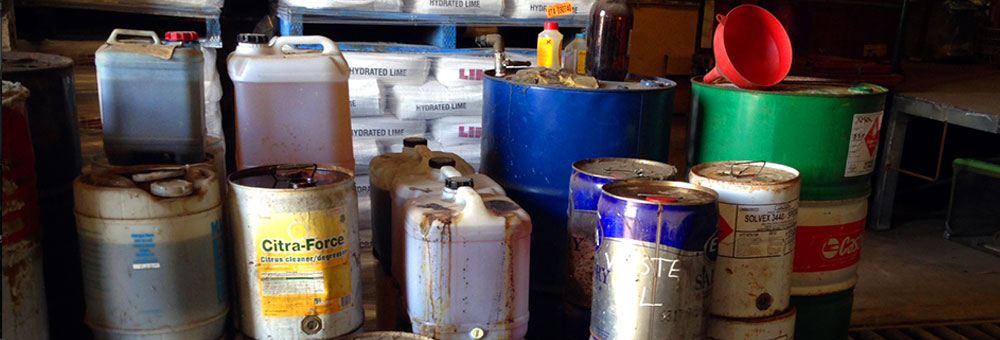
Waste materials can present particular challenges for flash point testing. Unlike homogeneous fuels or chemicals, waste is often a complex, heterogeneous mixture of different materials and chemicals with varying viscosities and volatilities. This can make representative sampling more difficult and can result in greater variability between flash point determinations.
Specific ASTM methods have therefore been developed for liquid wastes, alongside established flash point test methods used across industry.
ASTM D8174 and ASTM D8175 are purpose-built methods for liquid waste. ASTM D8174 is based on the established small-scale closed cup approach of ASTM D3278, while ASTM D8175 is based on the Pensky-Martens approach of ASTM D93. ASTM D8175 includes additional flash point determinations and averaging to help address the variability that can occur when testing waste samples.
More recently, ASTM D8606 introduced Modified Continuously Closed Cup Flash Point (MCCCFP) technology for liquid wastes, providing laboratories with an automated alternative that combines excellent repeatability, small sample volumes and high levels of laboratory safety. Stanhope-Seta instruments support testing in line with key international waste assessment standards and test methods, including:
These standards provide laboratories with established methods for waste assessment, classification and ongoing quality control.
Selecting the correct flash point method is essential for reliable results. Read our guide to choosing the right flash point tester for your application.
Key waste and environmental test parameters and Stanhope-Seta instruments
Flash Point
Why it matters: Flash point is a critical safety parameter for waste products, ensuring safe handling, correct classification and disposal.
Waste samples can be particularly challenging because their composition may not be uniform throughout the sample. Selecting an appropriate test method and following suitable sampling and testing procedures is therefore particularly important when determining the flash point of waste.
Small-scale and continuously closed cup methods also minimise operator exposure, reduce hazardous waste generation and require significantly smaller sample volumes than traditional methods.
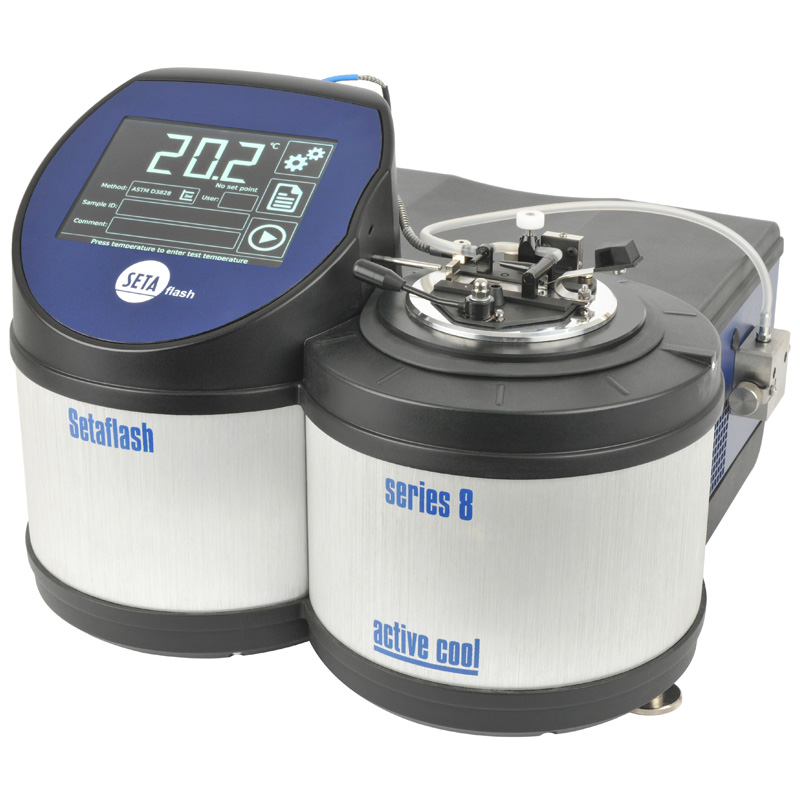
Setaflash Small Scale Closed Cup Flash Point Testers
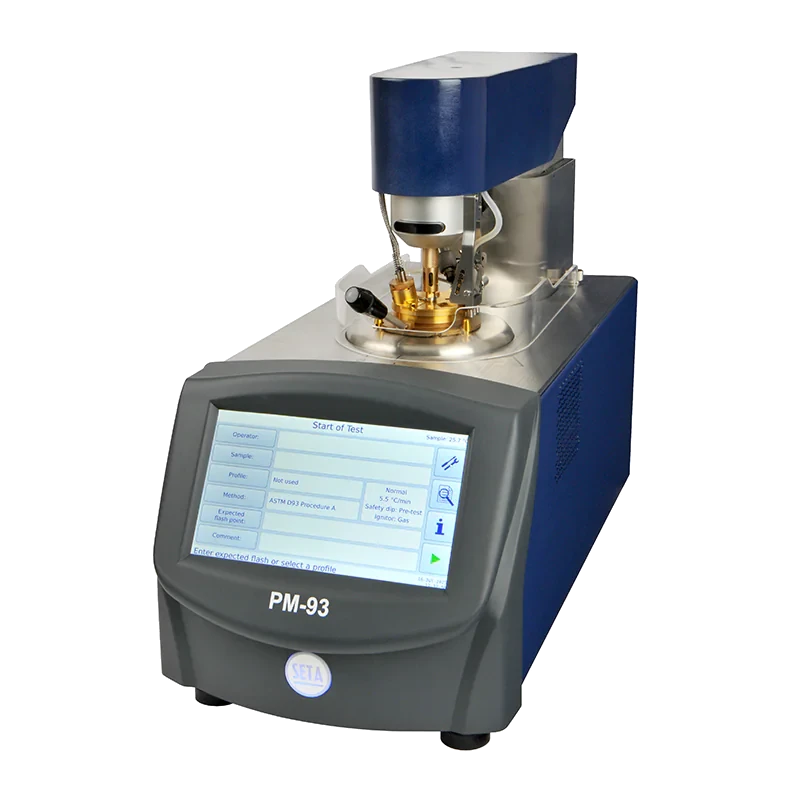
PM-93 Pensky-Martens Closed Cup Flash Point Tester
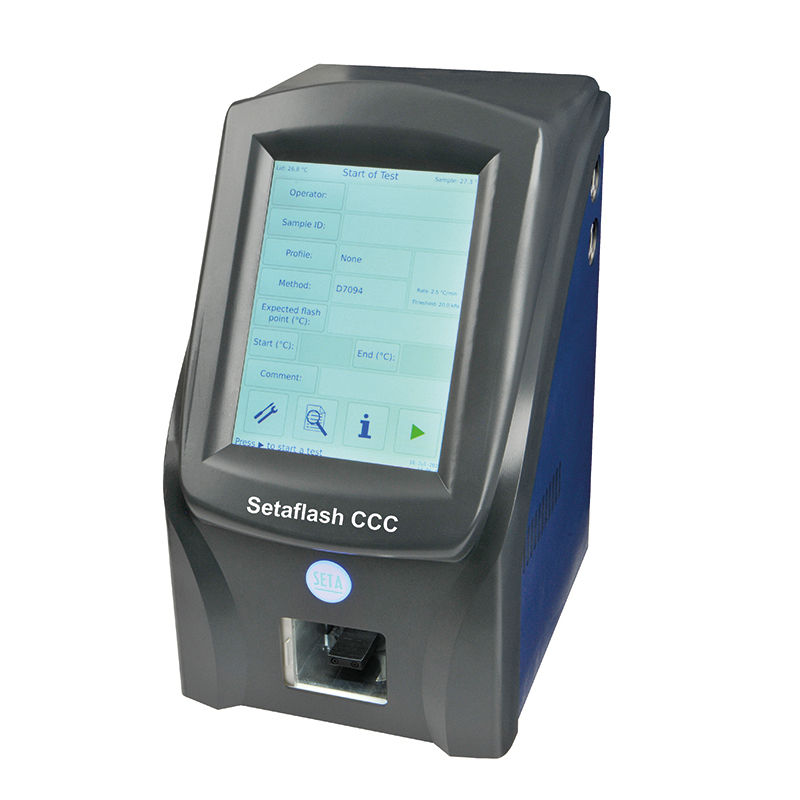
Setaflash CCC Continuously Closed Cup Flash Point Tester
Standards: ASTM D8174; ASTM D3278; ASTM D7236; ISO 3679
Standards: ASTM D93; ASTM D8175; IP 34; ISO 2719
Standards: ASTM D6450; ASTM D7094; ASTM D8606
- Simple operation
- Small sample volume
- 1 minute test
- Well established in waste testing laboratories
- Supports ASTM D8174, a purpose built small scale method for liquid wastes
- Fully automated operation
- Automatic fire detection and fire extinguisher
- Ultra low energy use
- Suitable for higher flash point samples and regulatory testing
- Supports ASTM D8175, a Pensky-Martens method developed specifically for liquid wastes
- 2 mL sample volume
- Fully automated operation
- Automatic fire detection and fire extinguisher
- Ideal for routine waste classification testing
- Supports ASTM D8606 for finite flash point determination of liquid wastes using MCCCFP technology
Certified Reference Materials for laboratory confidence
Reliable testing requires reliable calibration and verification.
Stanhope-Seta produces a comprehensive range of Certified Reference Materials (CRMs) and verification materials for waste and environmental testing, helping laboratories demonstrate instrument performance, maintain confidence in results and support ISO 17025 quality systems.
All materials are produced in Stanhope-Seta’s ISO 17025 and ISO 17034 accredited laboratory, ensuring traceability and confidence for audited laboratories.
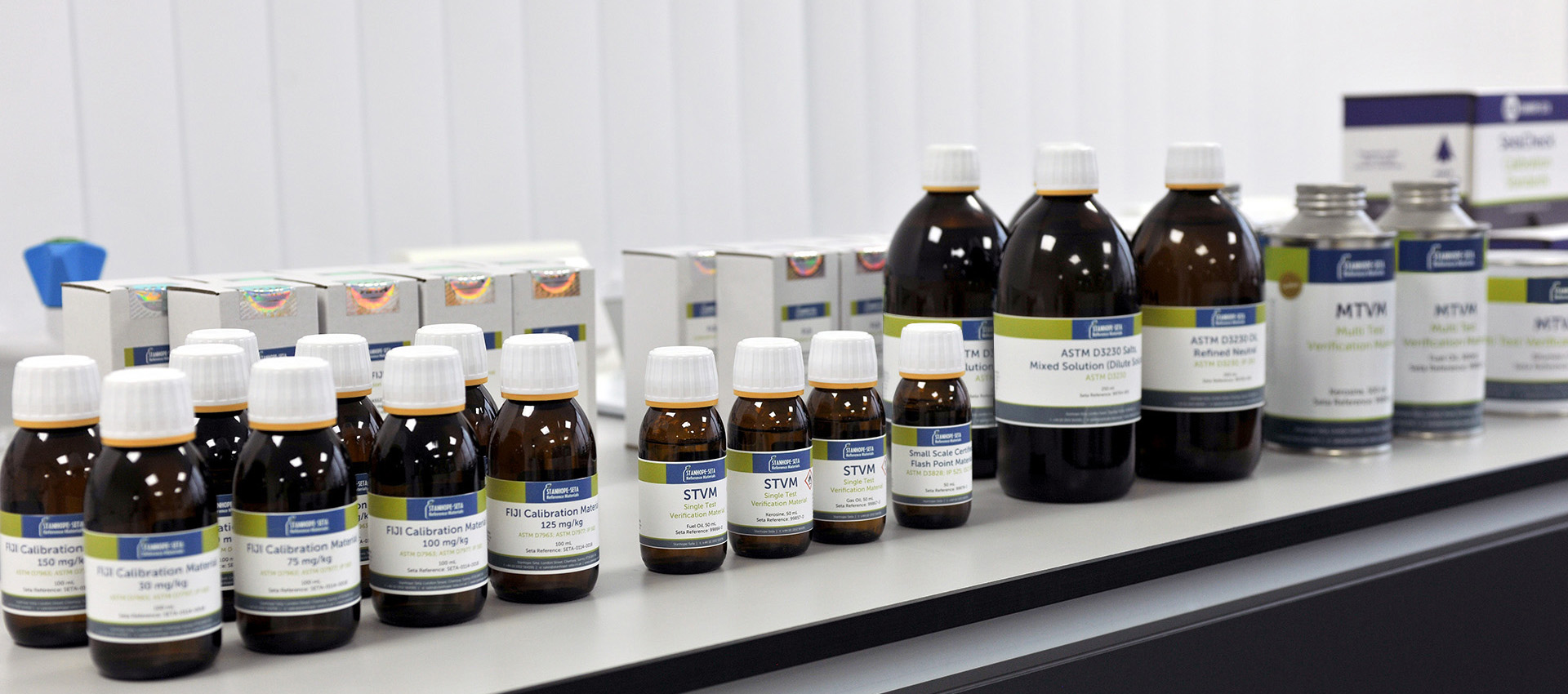
Unsure which reference material is suitable for your test method? Read our guide to selecting the right flash point Certified Reference Material.