
Flash point can be measured using several different test techniques, each designed for specific sample types, applications and regulatory requirements. Selecting the correct flash point test is essential because different methods can produce different results and many product specifications and regulations require a particular test method.
The most important distinction is between closed cup flash point testing and open cup flash point testing, but there are also significant differences between equilibrium and non-equilibrium methods, sample sizes, test speeds and levels of automation.
This guide explains the different types of flash point test, how they work and how to determine which method is most appropriate for your application.
Why are there different flash point tests?
Flash point is a method-defined property. Different products behave differently when heated, and different industries have developed test methods that best represent the hazards and applications of particular materials.
Some methods are designed for fuels and petroleum products, while others are optimised for chemicals, solvents, pharmaceuticals, fragrances or waste materials. International standards organisations including ASTM, IP, ISO and EN have developed a range of flash point methods to ensure results are repeatable, comparable and suitable for their intended purpose.
The method selected can influence:
- Sample size required
- Test duration
- Precision and repeatability
- Detection of contamination
- Regulatory acceptance
- Instrument selection
- Laboratory throughput
In most cases, the correct method is specified within a product standard, customer requirement or regulatory framework.
If you’re unsure which method applies to your sample, see our guide on Which flash point test method should you use >
Open cup vs closed cup flash point testing
The first and most important distinction is whether the test is carried out in an open cup or closed cup environment.
Closed cup flash point tests
Closed cup testing is the most widely used approach for fuels, chemicals, solvents and regulatory classification. In a closed cup test, the sample is enclosed within a covered chamber while it is heated. Vapours are retained above the sample until an ignition source is introduced.
This approach more closely represents situations where vapours may accumulate within storage tanks, containers, processing equipment or transportation systems.
Advantages of closed cup testing
- Higher precision and repeatability
- Better detection of volatile contaminants
- Lower sample requirements for some methods
- Widely specified by regulations
- Better representation of many real-world storage conditions
Common closed cup methods
Closed cup methods typically produce lower flash point results than open cup methods because vapours are retained within the test chamber.
Stanhope-Seta closed cup flash point testers
Stanhope-Seta offers a range of closed cup flash point testers, including:
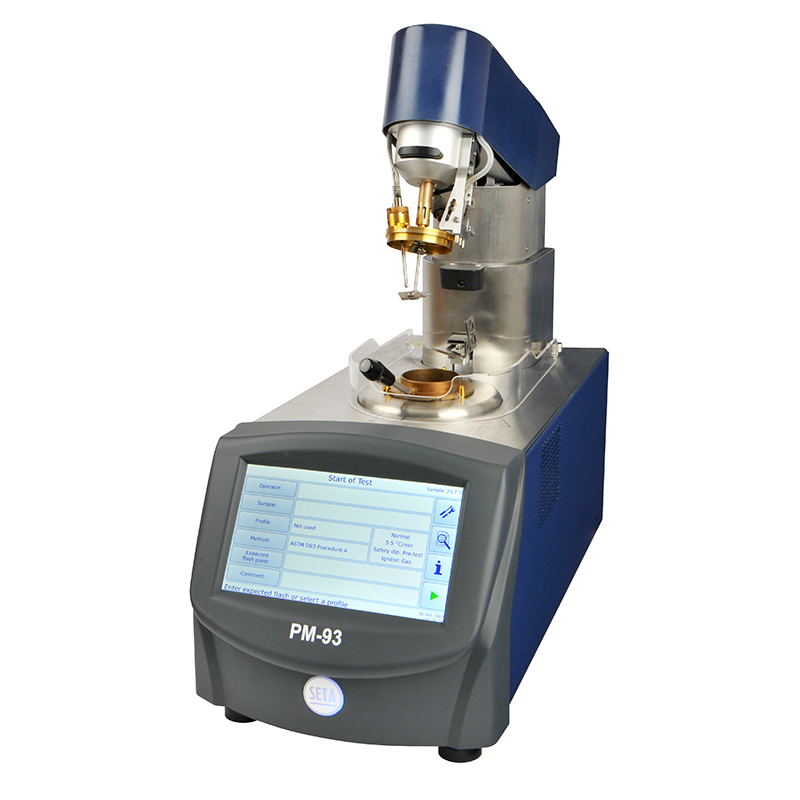
PM-93 Pensky-Martens Closed Cup Flash Point Tester
ASTM D93; ASTM D8175; IP 34; ISO 2719
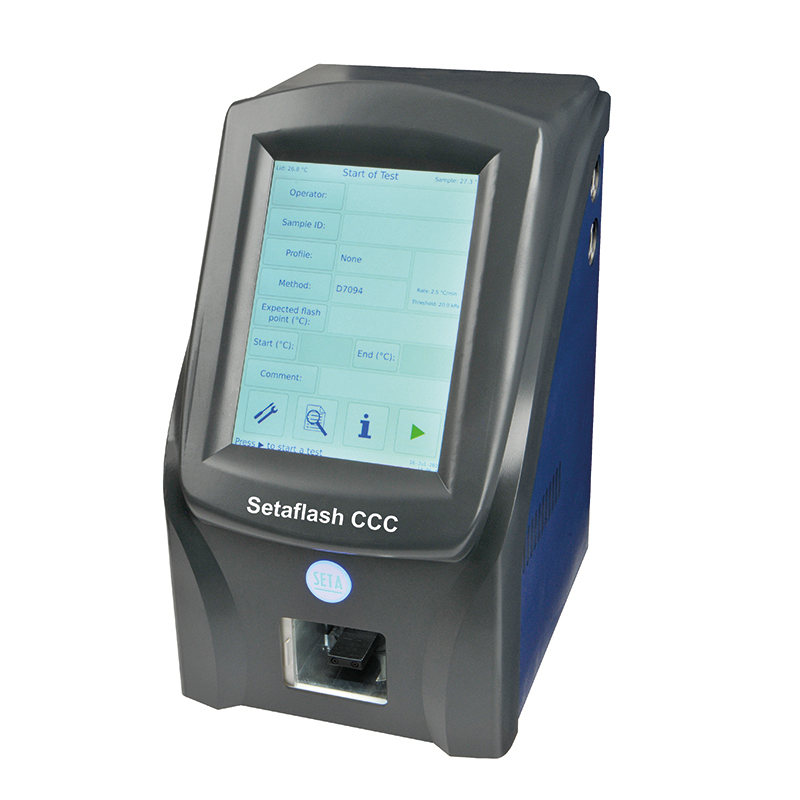
Setaflash CCC Continuously Closed Cup Flash Point Tester
ASTM D6450; ASTM D7094; ASTM D8606; IP 620; ISO 24966
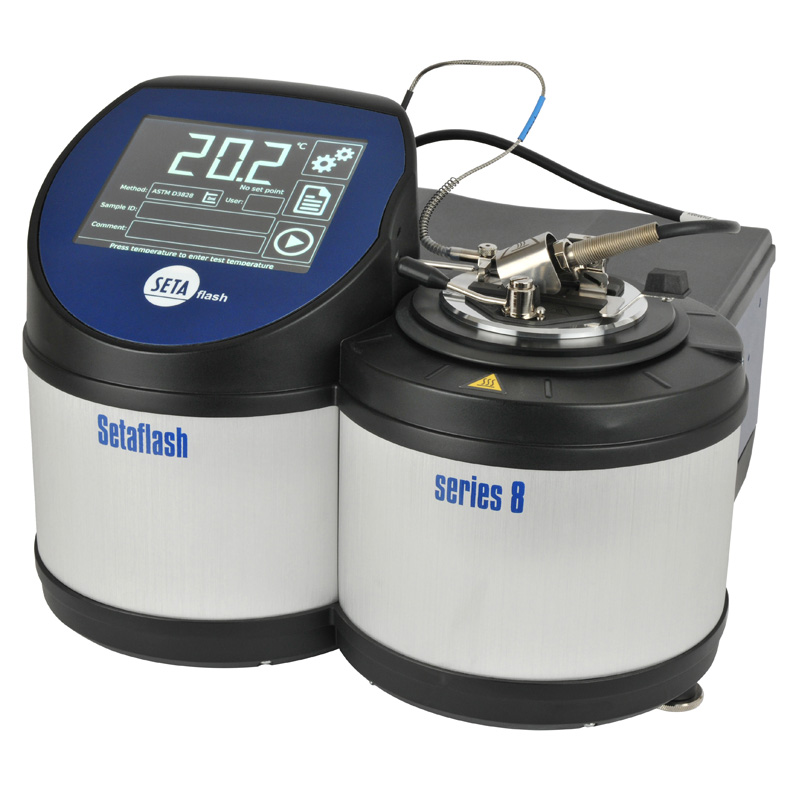
Setaflash Series 8 Small Scale Closed Cup Flash Point Tester
ASTM D3278; ASTM D3828; ASTM D7236; ASTM D8174; IP 523; IP 534; ISO 3679; ISO 3680; EPA 1020 B
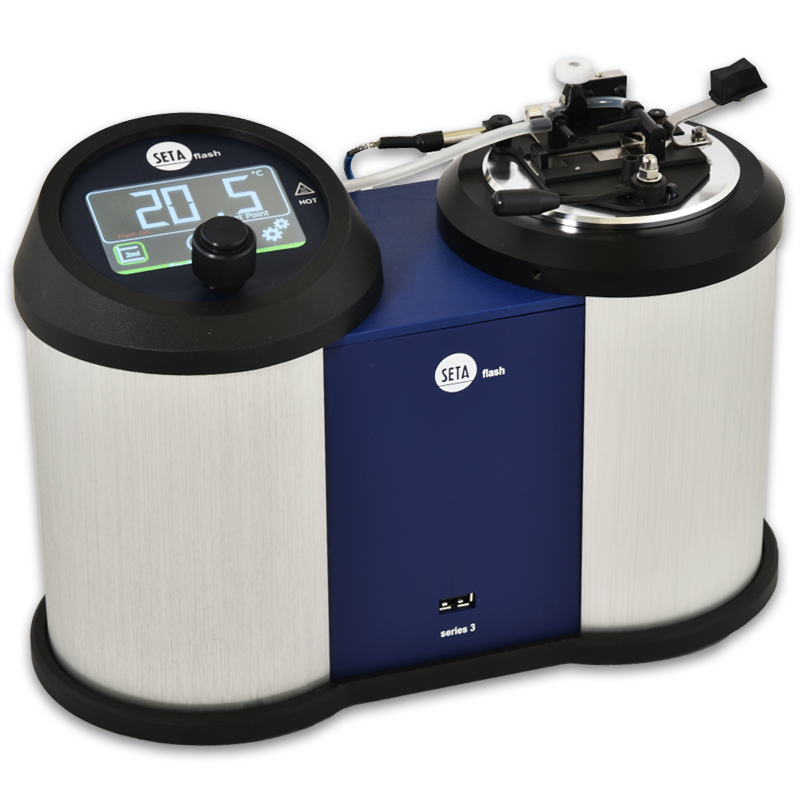
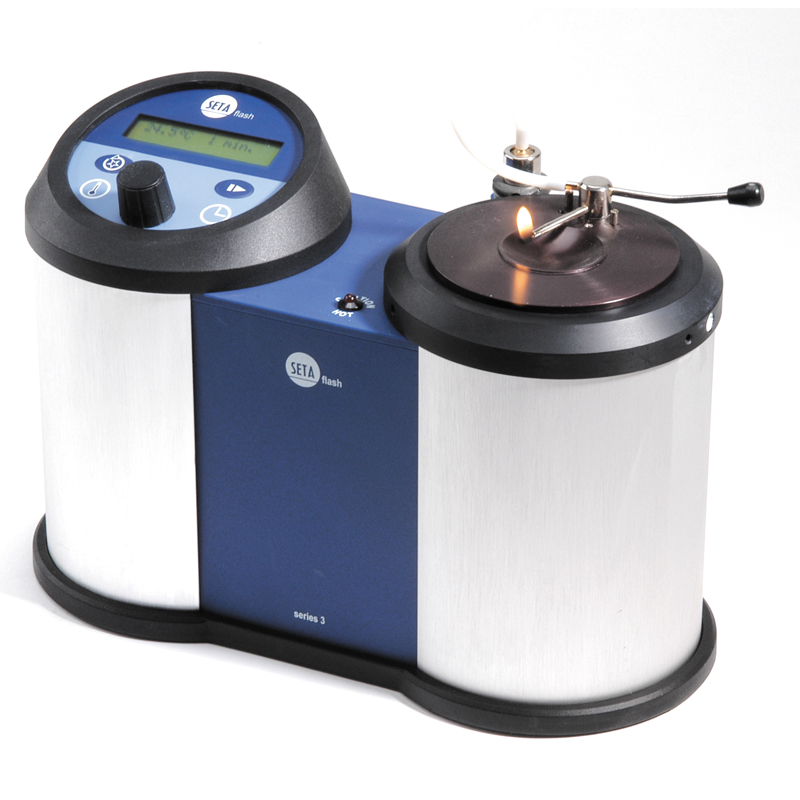
Setaflash Series 3 Small Scale Closed Cup Flash Point Tester
ASTM D3278; ASTM D3828; ASTM D4206; ASTM D7236; ASTM D8174; IP 523; IP 534; IP 602; ISO 3679; ISO 3680; ISO 9038; EPA 1020 B
Learn more about flash point testing and why it is measured >
Open cup flash point tests
Open cup testing is performed with the sample exposed to the atmosphere throughout the test.
Because vapours can escape freely from the test cup, the measured flash point is generally higher than the equivalent closed cup result.
Open cup methods are often specified for lubricants, heavy oils, bitumen and products where open-air exposure is relevant.
Advantages of open cup testing
- Suitable for higher flash point materials
- Often required by lubricant specifications
- Can be used for fire point determination
- Useful for combustibility assessments
Common open cup methods
- Cleveland Open Cup (COC)
- Open Cup Setaflash methods
- Fire Point tests
- Sustained Burning tests
Open cup testing is commonly used when assessing materials that may be exposed to air during handling or use.
Stanhope-Seta open cup flash point testers
Stanhope-Seta offers both manual and automatic open cup flash point testing solutions, including:
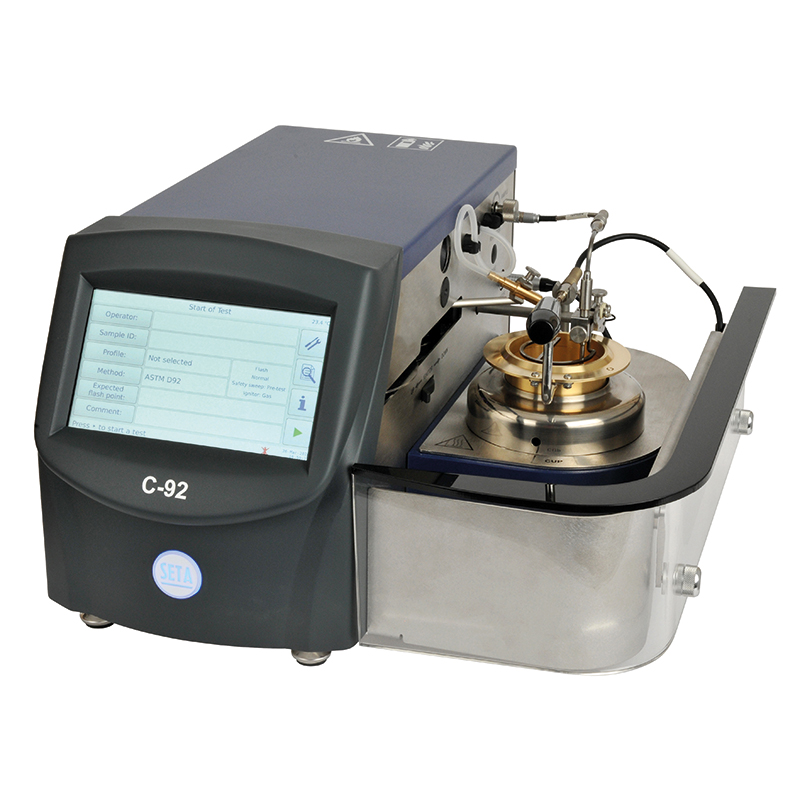
C-92 Automatic Cleveland Open Cup Flash Point Tester
ASTM D92; ASTM D8254; IP 36; AASHTO T48; DIN 51 376; ISO 2592; JIS K2265
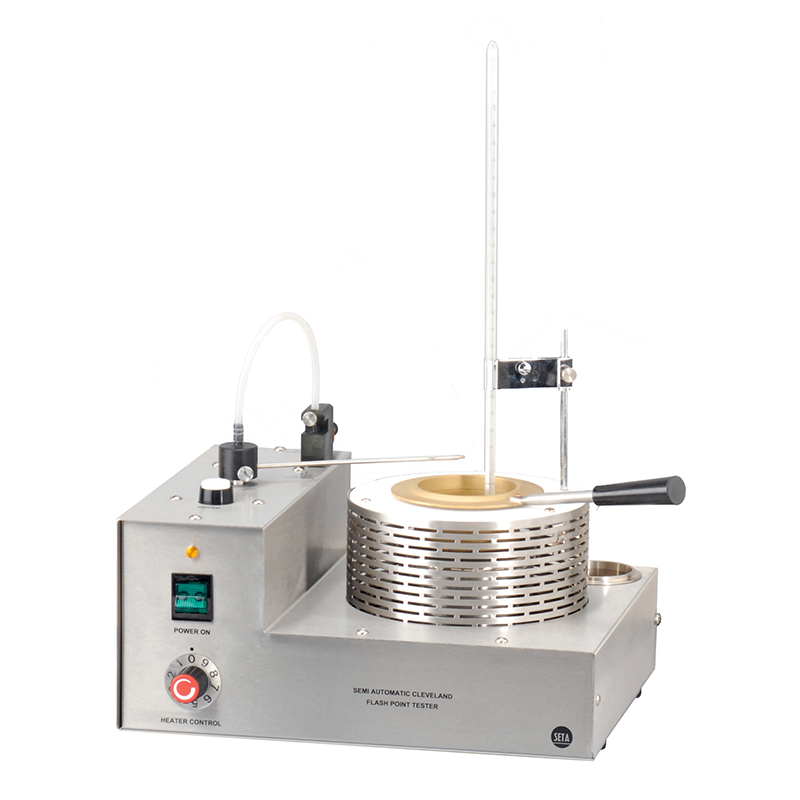
Cleveland Semi-Automatic Open Cup Flash Point Tester
ASTM D92; IP 36; BS DIN EN ISO 2592
Setaflash Series 3 Small Scale Open Cup Flash Point Tester
ASTM D4206; IP 602; BS 3900-A11; CFR 49-173.120 Appendix H
Equilibrium vs non-equilibrium flash point testing
Another important distinction is whether the test is performed under equilibrium or non-equilibrium conditions.
What is an equilibrium flash point test?
An equilibrium flash point test allows the liquid sample and the vapour above it to reach the same temperature before the ignition source is applied. Because the liquid and vapour are in equilibrium, these methods often provide highly repeatable results while using relatively small sample volumes.
Benefits of equilibrium testing
- Excellent precision
- Small sample requirements
- Faster testing
- Reduced operating costs
- Ideal for routine quality control
Stanhope-Seta equilibrium flash point testers
The Setaflash principle is based on equilibrium testing and forms the basis of several internationally recognised flash point methods.
Setaflash Series 8 Small Scale Closed Cup Flash Point Tester
ASTM D3278; ASTM D3828; ASTM D7236; ASTM D8174; IP 523; IP 534; ISO 3679; ISO 3680; EPA 1020 B
Setaflash Series 3 Small Scale Closed Cup Flash Point Tester
ASTM D3278; ASTM D3828; ASTM D4206; ASTM D7236; ASTM D8174; IP 523; IP 534; IP 602; ISO 3679; ISO 3680; ISO 9038; EPA 1020 B
These instruments are widely used for chemicals, solvents, flavours, fragrances, pharmaceuticals, dangerous goods classification and waste characterisation.
What is a non-equilibrium flash point test?
Non-equilibrium methods continuously heat the sample while ignition tests are performed at defined temperature intervals. The vapour temperature may differ from the liquid temperature throughout the test, which is why the method is described as non-equilibrium.
Benefits of equilibrium testing
- Long-established international standards
- Widely recognised by regulators
- Suitable for many petroleum products
- Well suited to automated testing
Stanhope-Seta non-equilibrium flash point testers
Many of the most widely referenced ASTM, ISO and IP flash point standards are based on non-equilibrium procedures.
PM-93 Pensky-Martens Closed Cup Flash Point Tester
ASTM D93; ASTM D8175; IP 34; ISO 2719
Setaflash CCC Continuously Closed Cup Flash Point Tester
ASTM D6450; ASTM D7094; ASTM D8606; IP 620; ISO 24966
C-92 Automatic Cleveland Open Cup Flash Point Tester
ASTM D92; ASTM D8254; IP 36; AASHTO T48; DIN 51 376; ISO 2592; JIS K2265
Cleveland Semi-Automatic Open Cup Flash Point Tester
ASTM D92; IP 36; BS DIN EN ISO 2592
Why do different flash point methods give different results?
One of the most common questions asked by laboratories is why the same sample can produce different flash point results when tested using different methods.
Different flash point methods use different:
- Sample volumes
- Heating rates
- Cup designs
- Ignition procedures
- Vapour conditions
- Stirring requirements
Because flash point is an empirical property dependent on the specific apparatus defined in the test method, results generated using different standards should not automatically be considered equivalent. For this reason, laboratories should always use the method specified by the relevant product standard, regulation or customer requirement.
How do I choose the right flash point test?
For most laboratories, the starting point should always be the product specification or applicable regulation. Questions to consider include:
What material am I testing?
Fuels, chemicals, lubricants, cosmetics and waste materials often require different methods.
Is there a specified standard?
Many products have mandated ASTM, ISO, EN or IP methods.
How much sample is available?
Some methods require larger sample volumes, while small-scale methods can operate using only a few millilitres.
Is speed important?
Some methods can produce results significantly faster than traditional procedures.
Is automation required?
Automated flash point testers can improve throughput, reduce operator involvement and improve repeatability.
For a more detailed guide, read What to consider when choosing a flash point tester >
Why choose Stanhope-Seta flash point testing instruments?
For more than 80 years, Stanhope-Seta has been developing laboratory instruments used by testing laboratories, refineries, fuel producers, chemical manufacturers and research organisations around the world. We are at the forefront of companies supplying technical support and standardisation involvement.
Choosing the correct flash point test can be challenging, particularly when working with new products, speciality chemicals or evolving regulatory requirements.
Stanhope-Seta has decades of experience supporting laboratories across petroleum, chemical, pharmaceutical, cosmetic, environmental and research applications. If you are unsure which flash point method or instrument is right for your sample, contact our team for expert advice.
Global benchmark in laboratory instruments for quality control
Solutions aligned with ASTM, IP, ISO, CEN and DEF STAN requirements
ISO 17034 Certified Reference Materials
Designed and manufactured in the UK with worldwide support
Types of Flash Point Test Frequently Asked Questions
What is the difference between open cup and closed cup flash point testing?
Closed cup testing retains vapours above the sample before ignition testing, while open cup testing allows vapours to escape to the atmosphere. Closed cup results are typically lower than open cup results.
Why do different flash point methods give different results?
Each method uses different sample sizes, heating rates, cup designs and testing procedures. These differences influence vapour formation and ignition behaviour.
Which flash point test is used for fuels?
Pensky-Martens Closed Cup is commonly specified for many fuels and petroleum products, although the exact method depends on the relevant product standard.
Which flash point test uses the smallest sample volume?
Small Scale Closed Cup methods such as Setaflash typically require significantly smaller sample volumes than traditional flash point methods.
Can I compare results from different flash point methods?
No, results from different methods should not automatically be considered equivalent. The appropriate method should always be selected according to the applicable specification or regulation.