

Testing and quality control solutions
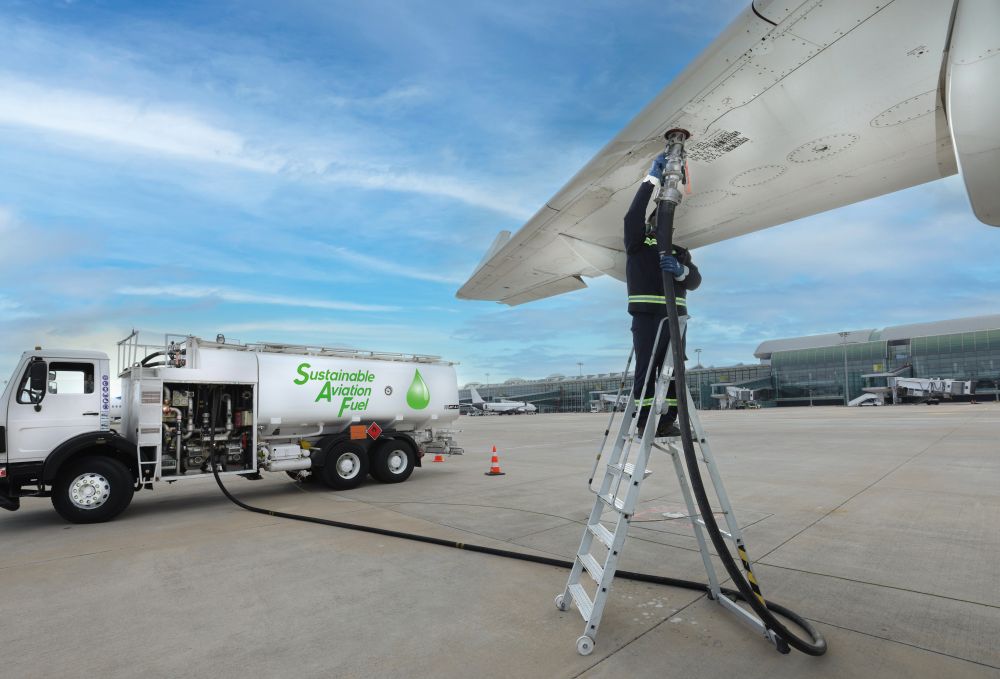
Sustainable Aviation Fuel (SAF) plays a critical role in reducing aviation’s carbon footprint while maintaining the safety, reliability and performance required of aviation turbine fuels.
Stanhope-Seta provides proven laboratory instruments and Certified Reference Materials that support the development, approval and routine quality control of SAF, Synthetic Aviation Turbine Fuel (SATF) and Synthetic Blend Components (SBC).
With decades of experience in aviation fuel testing and active involvement in international standards development, Stanhope-Seta is trusted by fuel producers, laboratories and regulators worldwide.
Global benchmark in fuel testing solutions
Solutions aligned with ASTM, IP, ISO, CEN and DEF STAN requirements
ISO 17034 Certified Reference Materials
Designed and manufactured in the UK with worldwide support
What is Sustainable Aviation Fuel (SAF)?
Sustainable Aviation Fuel (SAF) is an aviation turbine fuel containing synthesised hydrocarbons derived from sustainable feedstock’s produced according to approved specifications. SAF is blended with conventional Jet A/Jet A-1 to make a drop-in aviation fuel, meaning it is approved for use in aircraft and infrastructure.
SAF is currently produced from a wide range of feedstock’s including:
Waste oils and fats
Used cooking oil
Biomass and sugars
Alcohol to jet and synthetic gas pathways
Depending on the production route, SAF is introduced into aviation fuel as a Synthetic Blend Component (SBC) in accordance with ASTM D7566, before being approved and released as Jet A or Jet A-1 meeting specifications ASTM D1655 and DEF STAN 91-091.
Approved and developing SAF pathways
SAF is being developed through a growing range of feedstocks and conversion technologies. Discover what HEFA-SPK, FT-SPK, ATJ-SPK and other SAF acronyms mean, which pathways are currently incorporated into ASTM D7566 and which remain in development.
Why SAF testing is critical
While SAF offers significant environmental benefits, it must meet the same stringent safety, performance and specifications as conventional aviation fuel.
Fuel safety
Ensuring flash point, cleanliness and water separation performance meet aviation requirements.
Compatibility
Managing subtle differences in chemical composition compared to conventional jet fuel.
Contamination control
Detecting trace levels of FAME, ethanol or other prohibited components.
Aircraft performance
Verifying properties such as dielectric constant that affect fuel gauging systems.
Accurate, reliable testing is essential to ensure compliance, prevent costly delays and maintain confidence throughout the SAF supply chain.
SAF standards and specifications
Stanhope-Seta instruments support testing in line with key international aviation fuel standards and test methods, including:
Energy Institute (IP) methods, including IP 638, IP 583, IP 617, IP 565, IP 34, IP 523, IP 170, IP 534, IP 620, IP 624.
These standards define the framework for SAF approval, blending, certification and ongoing quality control.
Key SAF test parameters and Stanhope-Seta instruments
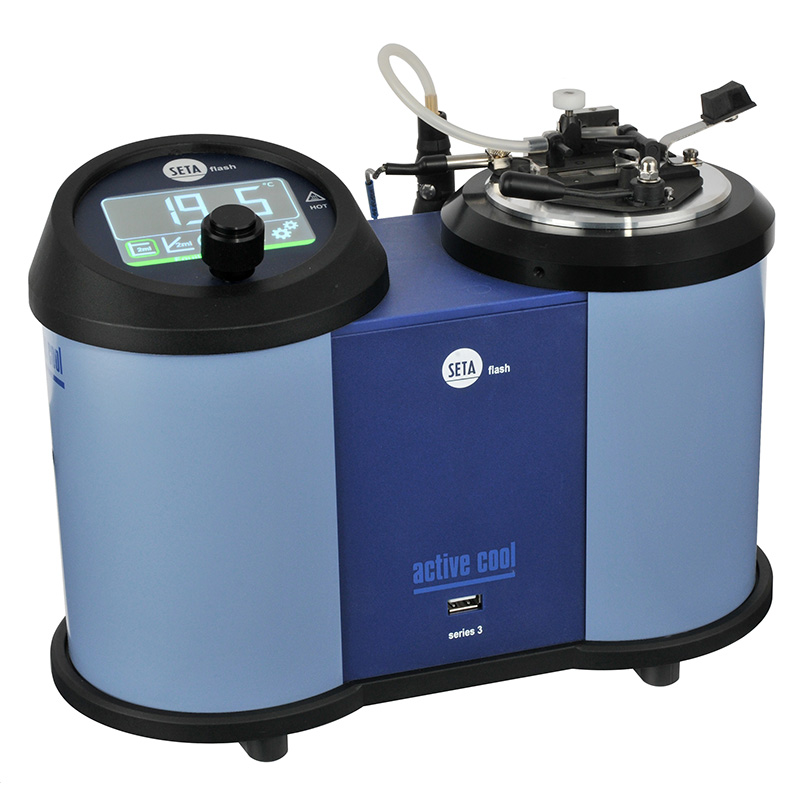
Flash Point
Why it matters: Flash point is a critical safety parameter for aviation fuels, ensuring safe handling and operation.
Standards: ASTM D93, ASTM D3828, ASTM D7094, IP 34, IP 523, IP 620
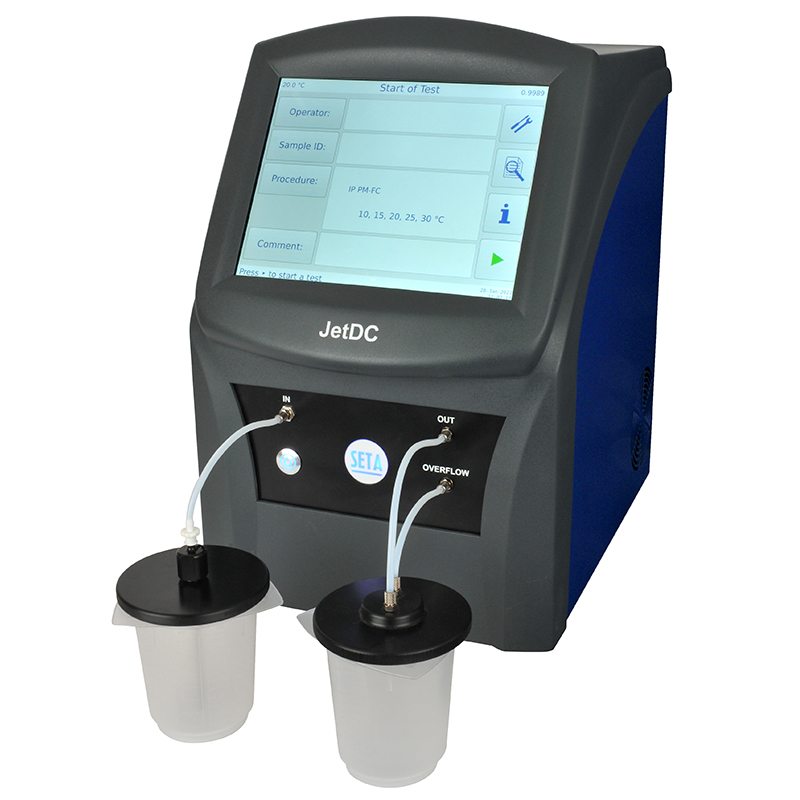
Dielectric Constant
(Relative Permittivity)
Why it matters: Aircraft fuel gauging systems rely on dielectric constant to determine fuel quantity. Small variations in SAF composition can affect gauge accuracy.
Standards: IP 638, ASTM D4054
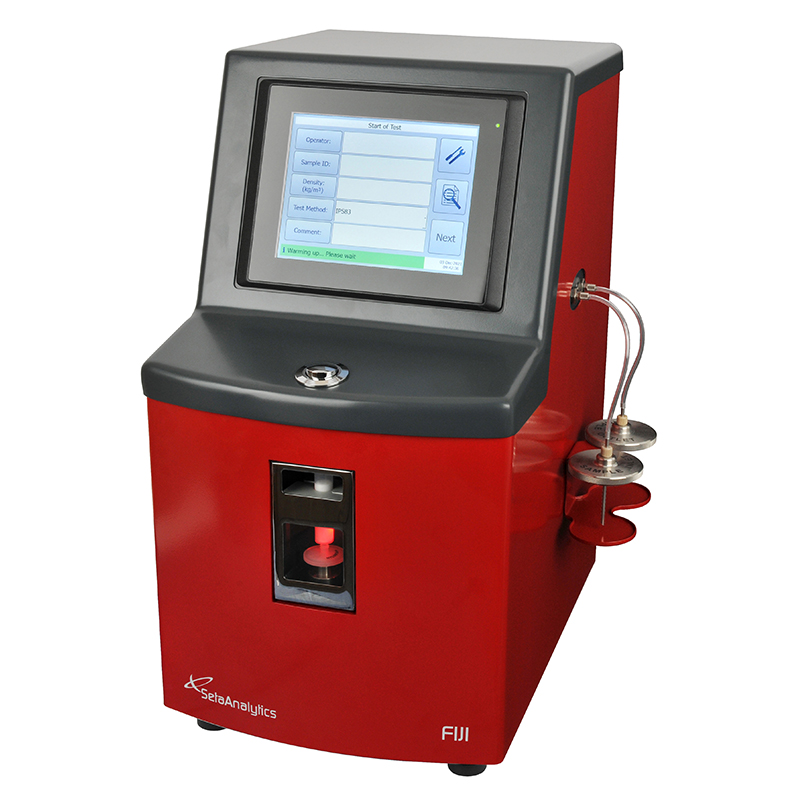
FAME Content
(Fatty Acid Methyl Esters)
Why it matters: FAME is tightly restricted in aviation fuels due to risks of filter blockage, freeze point and system incompatibility. Trace contamination causes non-compliance.
Standards: ASTM D7797, IP 583
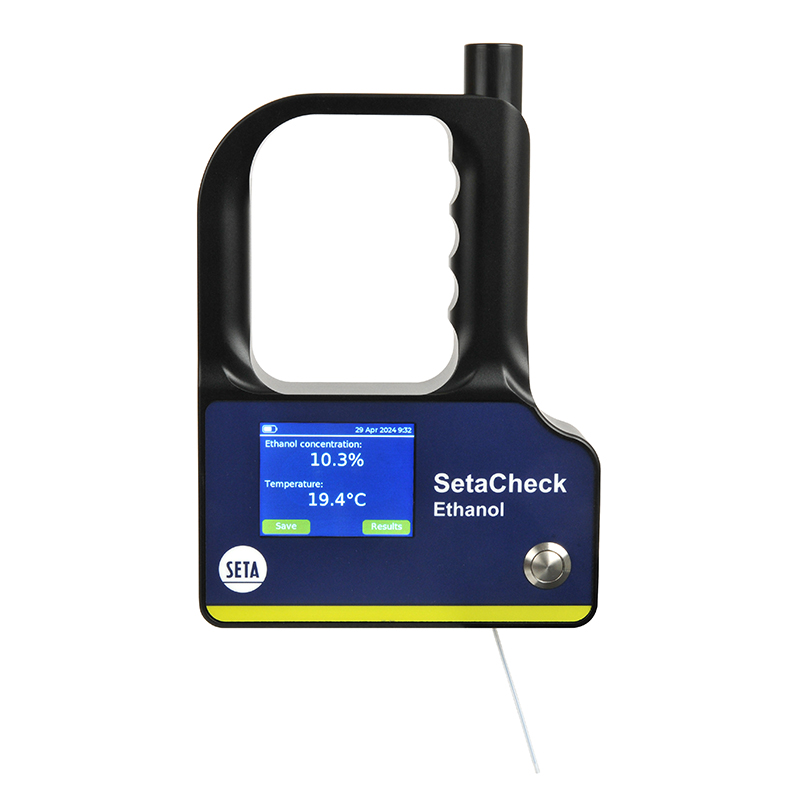
Ethanol Content
Why it matters: While ethanol is widely used in road fuels, it is not permitted in aviation fuels. Ensuring ethanol-free aviation gasoline is a critical step in quality assurance.
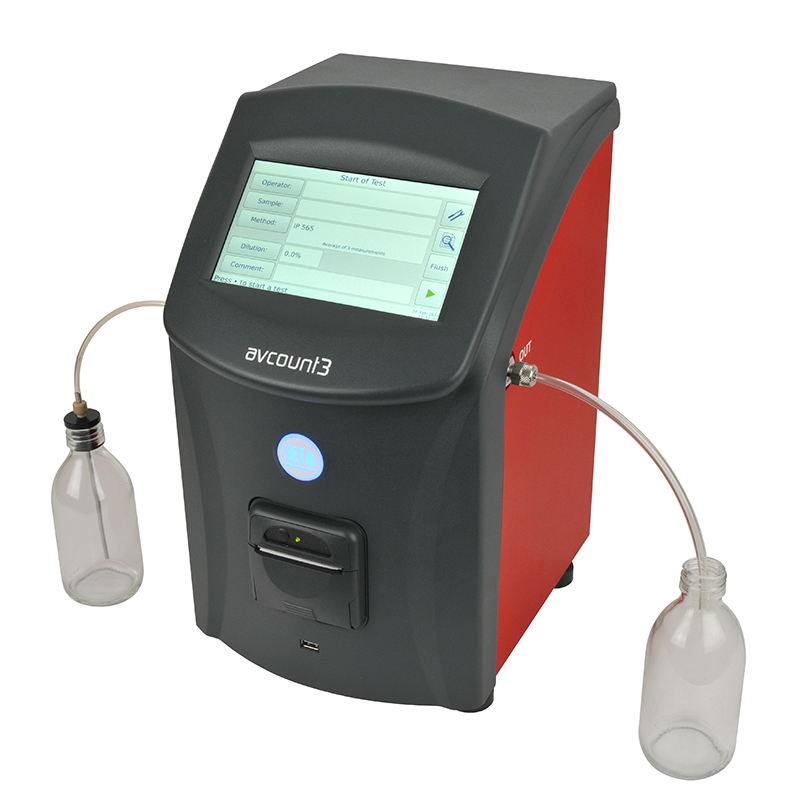
Particle Counting and Cleanliness
Why it matters: Solid particles and water droplets can cause erosion, corrosion and filter blockage in aircraft fuel systems.
Standards: ASTM D7619, IP 565
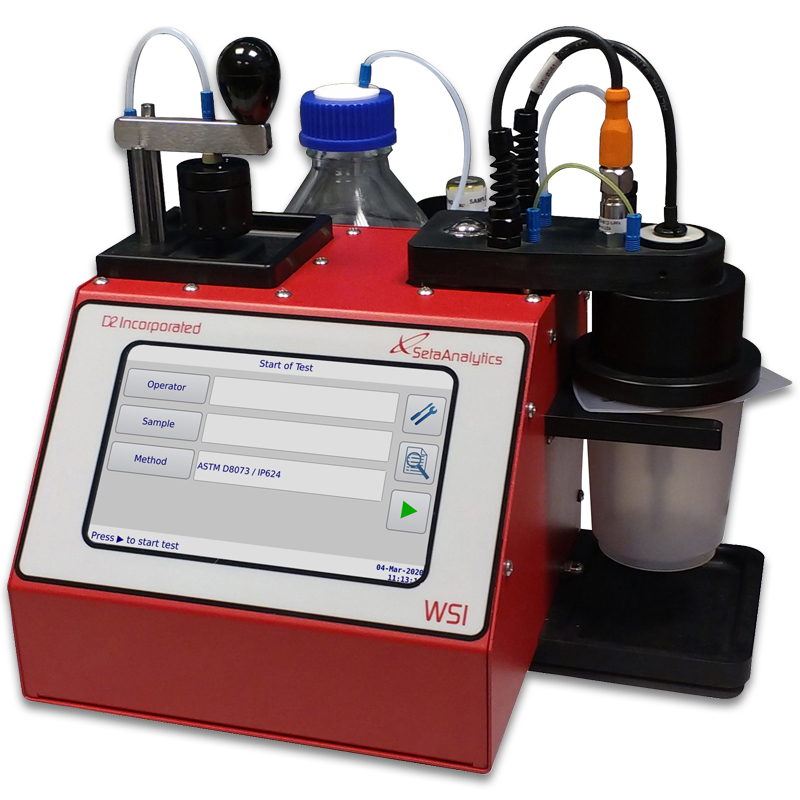
Water Separation Characteristics
Why it matters: SAF blends may contain additives that affect water coalescence. Poor water separation can lead to system failures and contamination risks.
Standards: ASTM D8073, IP 624
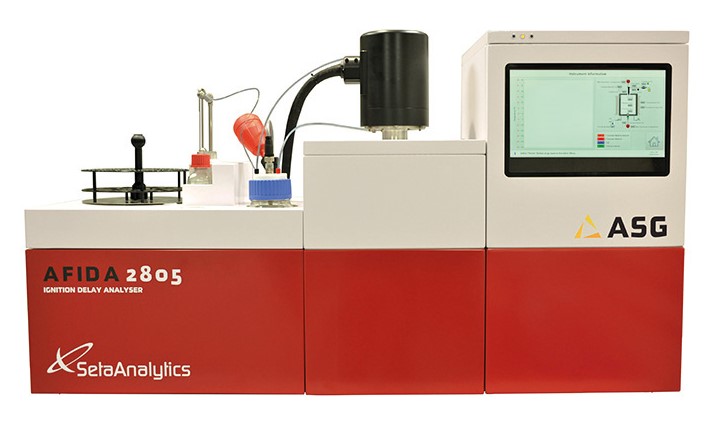
Cetane / Ignition Quality
Why it matters: New synthetic blend components must meet combustion requirements in ASTM D4054 when evaluated for inclusion in ASTM D7566. Combustion is determined by Indicated Cetane Number.
Standards: ASTM D8183, IP 617
Certified Reference Materials for SAF
Reliable testing requires reliable calibration and verification.
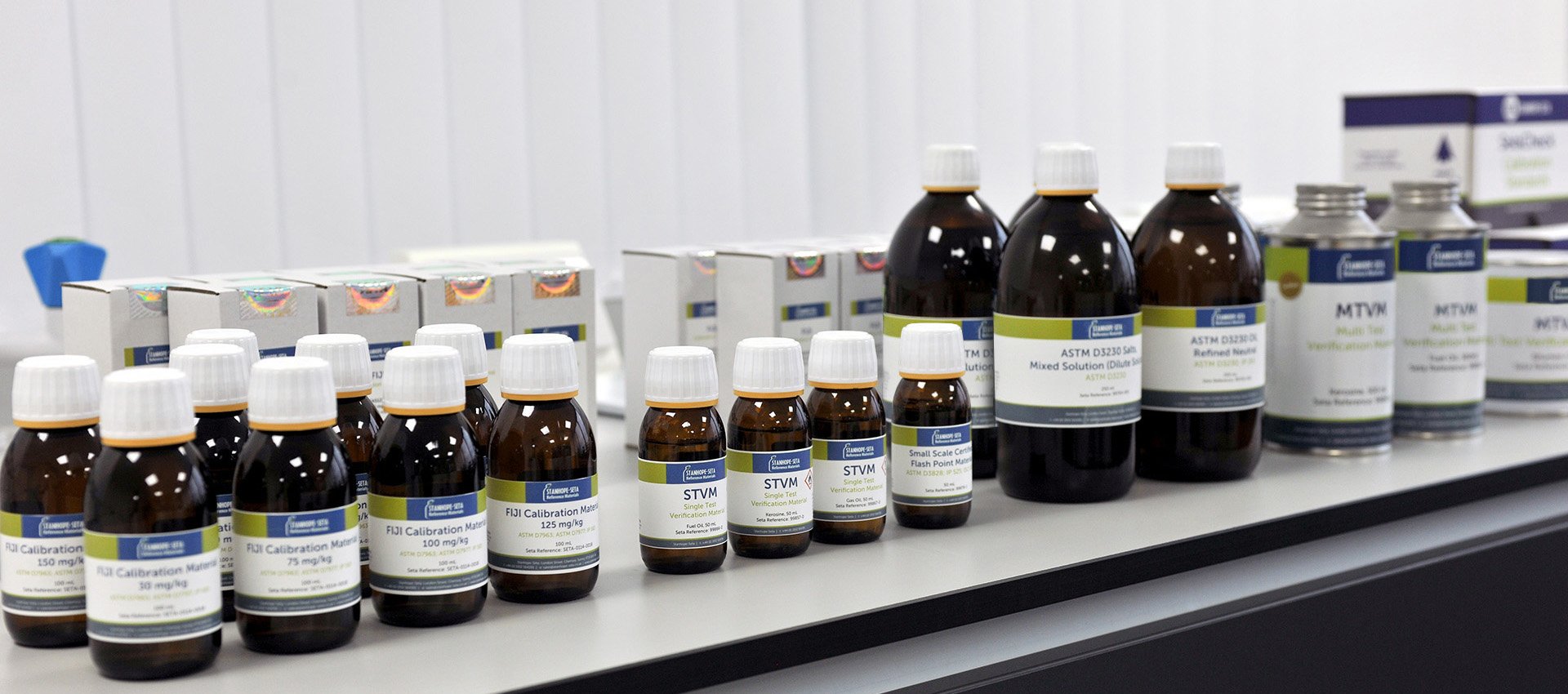
Stanhope-Seta produces a comprehensive range of Certified Reference Materials (CRMs) and verification materials for SAF testing.
All materials are produced in Stanhope-Seta’s ISO 17025 and ISO 17034 accredited laboratory, ensuring traceability and confidence for audited laboratories.
Flash point reference materials >
FAME calibration and verification standards >
Ethanol calibration and verification materials >
Beyond Sustainable Aviation Fuel
In addition to SAF, Stanhope-Seta provides instrument testing solutions for:
- Renewable diesel and synthetic distillates
- Marine fuels and marine methanol
- Road fuel blends and biofuels
- Heating fuels and alternative energy applications
This allows customers operating across multiple fuel sectors to rely on a single, trusted testing partner.
Talk to our Sustainable Aviation Fuel experts
Whether you are developing new SAF pathways, qualifying synthetic blend components, or performing routine quality control, Stanhope-Seta can support your testing requirements.
Sustainable Aviation Fuel (SAF) Testing FAQs
Does Sustainable Aviation Fuel (SAF) require different testing to conventional aviation fuel?
Yes. Although SAF is designed to be compatible with existing aircraft and fuel infrastructure, it must still meet the same stringent safety and performance requirements as conventional aviation turbine fuel. Depending on the production pathway, additional evaluation may be required during fuel qualification, with routine quality control including parameters such as flash point, FAME contamination, particle counting, water separation, dielectric constant and ignition quality.
What standards apply to Sustainable Aviation Fuel testing?
Several international standards support SAF development, approval and routine testing. These include ASTM D4054 for evaluating new aviation fuels, ASTM D7566 for aviation turbine fuel containing synthesised hydrocarbons, ASTM D1655 for conventional aviation turbine fuel specifications and DEF STAN 91-091 for Jet A-1. Individual fuel properties are measured using a range of ASTM and IP test methods appropriate to each parameter.
Why is flash point testing important for SAF?
Flash point is a critical safety property that determines the temperature at which a fuel produces sufficient vapour to ignite. Sustainable Aviation Fuel must meet the same flash point specifications as conventional aviation fuel to ensure safe transport, storage and handling.
Why is FAME contamination monitored in aviation fuel?
Fatty Acid Methyl Esters (FAME) are widely used in biodiesel but are tightly controlled in aviation fuels because even trace contamination can affect fuel system performance and contribute to operational issues. Routine monitoring helps ensure compliance with aviation fuel specifications.
Why is dielectric constant measured in Sustainable Aviation Fuel?
Aircraft fuel quantity indication systems rely on dielectric constant to accurately determine fuel quantity. Different SAF production pathways may produce fuels with slightly different electrical properties, making dielectric constant measurement an important part of fuel evaluation and quality control.
What laboratory instruments are used for SAF testing?
SAF testing typically requires a combination of analytical instruments depending on the fuel property being measured. Common test parameters include flash point, dielectric constant, FAME contamination, ethanol content, particle counting, water separation characteristics and indicated cetane number.
Why are Certified Reference Materials important for SAF testing?
Certified Reference Materials (CRMs) help laboratories verify instrument performance, demonstrate traceability and maintain confidence in test results. Using ISO 17025 and ISO 17034 accredited reference materials supports quality assurance and compliance with laboratory accreditation requirements.