

Flash Point Testing in Flavours and Fragrances: Reducing Cost, Improving Safety and Ensuring Compliance
Flash point testing is a critical part of classifying and handling flavours, fragrances and essential oils. However, in many laboratories it is still treated as a routine measurement rather than an opportunity to improve cost efficiency, safety and data reliability.
In practice, the choice of instrument has a direct impact on:
- how much sample is consumed
- how safely tests are carried out
- how confident you can be in the result
The Setaflash CCC Continuously Closed Cup flash point tester 35600-0, is designed to address all three.
Reducing cost through minimal sample volume
One of the biggest hidden costs in fragrance laboratories is sample consumption. Many materials are high-value and produced in limited quantities, so using more sample than necessary quickly becomes expensive.
The Setaflash CCC reduces this significantly by requiring:
- just 1 mL for ASTM D6450
- or 2 mL for ASTM D7094
This allows laboratories to minimise waste while still achieving accurate, compliant results. Over time, the reduction in sample usage can lead to a meaningful decrease in cost per test, particularly when working with premium fragrance compounds.
Fragrance and flavour materials often produce strong or persistent odours during testing. By using small sample volumes within a closed cup design, the Setaflash CCC helps minimise vapour release into the laboratory environment. This improves operator safety and reduces the impact of routine testing on surrounding laboratory areas.

Designed for maximum safety
Testing volatile materials introduces inherent risk, but not all flash point testers are designed with the same level of protection.
The Setaflash CCC incorporates multiple layers of safety within a fully enclosed system. These include:
- optical fire detection that continuously monitors the test chamber
- an inert gas fire extinguisher that can activate automatically or manually
- over-temperature protection and pre-test ignition checks
- an independent emergency stop for immediate shutdown
This combination of features is designed to reduce operator exposure and prevent escalation if a fire occurs. The Setaflash CCC is the most safety-focused Continuously Closed Cup instrument available for routine laboratory use.
Why method integrity matters
Flash point is not a fixed physical property. It is an empirical measurement, meaning the result depends entirely on how the test is carried out.
This has an important consequence: results obtained using different methods cannot be correlated or converted.
Industry standards now make it clear that correlated values are not valid for specification use. Laboratories must therefore rely on instruments that strictly follow recognised methods such as ASTM D6450 and ASTM D7094 to ensure compliance and avoid the risk of incorrect classification.
Eliminating invalid results
In many laboratories, repeat testing is not caused by instrument failure, but by incorrect test conditions. Poor sample mixing, missing stirrers or inconsistent operation can all lead to unreliable results.
The Setaflash CCC addresses this with dual-verification stirrer detection. Before a test begins, the instrument confirms that the stirrer is present. During the test, it continuously monitors that it is operating at the correct speed.
This ensures that:
- results can be trusted
- each test is carried out under valid conditions
- samples are not wasted on failed runs
Minimising cross-contamination between samples
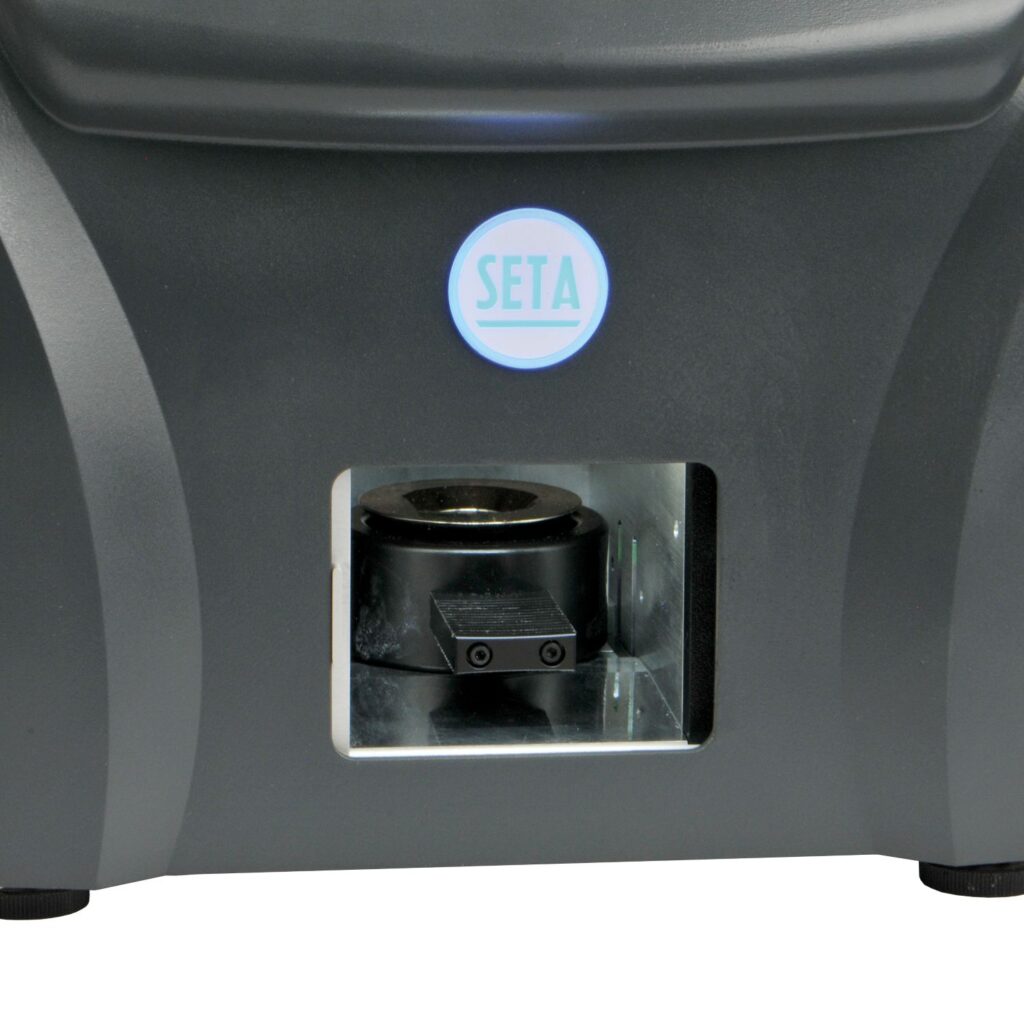
In fragrance testing, even trace residues from a previous sample can influence the next result. By using a removable test cup and minimal sample volume, the Setaflash CCC allows more effective cleaning between tests and reduces the risk of cross-contamination when multi-sample tests are carried out.
Improving laboratory efficiency
Beyond accuracy and safety, day-to-day efficiency is a key consideration. Small delays between tests can quickly add up, particularly in busy laboratories.
The Setaflash CCC is designed to minimise downtime through features such as:
- pre-heating the instrument before sample introduction
- rapid Peltier-assisted cooling between tests
- a removable test cup that simplifies cleaning
Together, these improvements create a smoother procedure and allow more tests to be completed in less time.
A modern approach to flash point testing
Flash point testing in flavours and fragrances should not be complex, wasteful or risky. By combining low sample requirements, advanced safety systems and built-in validation, the Setaflash CCC offers a more efficient and reliable approach.
The Setaflash CCC has been designed specifically with these challenges in mind, helping laboratories to:
- increase confidence in every result
- reduce operating costs
- improve safety
- ensure compliance
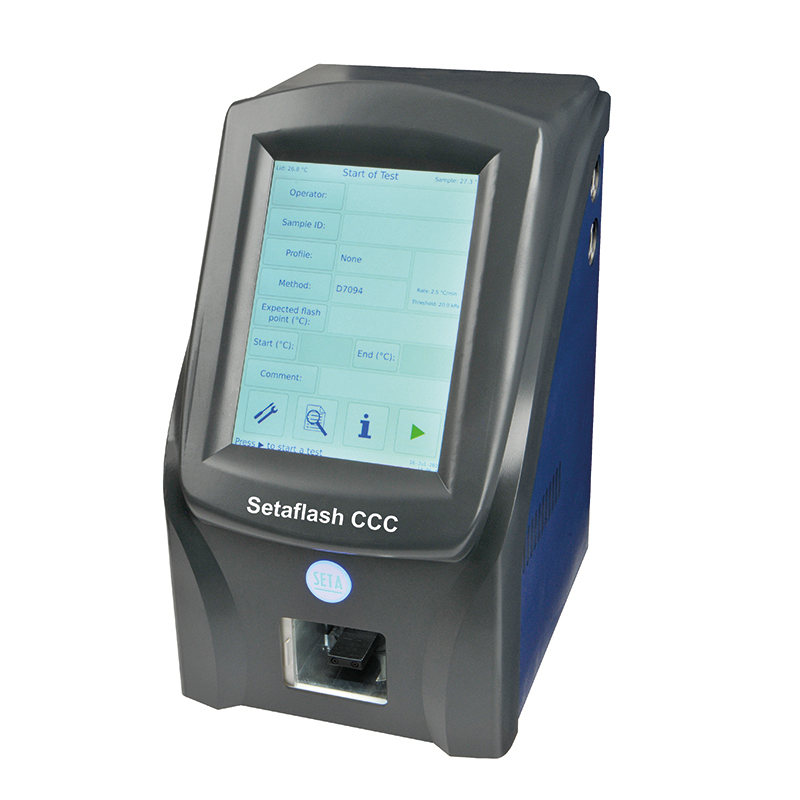
Explore the Setaflash CCC Continuously Closed Cup Flash Point Tester See how the Setaflash CCC helps flavour and fragrance laboratories reduce testing costs, improve safety and increase confidence in reported results.
Download the Application Note: Flash Point Testing of Flavours and Fragrances This application note explains how the Continuously Closed Cup method works, why ASTM D6450 and ASTM D7094 compliance is important, and how the Setaflash CCC helps laboratories reduce sample consumption, improve safety and increase confidence in flash point results.
Frequently Asked Questions About Flash Point Testing in Flavours and Fragrances
What is flash point testing for flavours and fragrances?
Flash point testing determines the lowest temperature at which a flavour, fragrance or essential oil produces sufficient vapour to ignite when exposed to an ignition source. Flash point data is used for safety classification, transportation, storage, handling and regulatory compliance. Accurate flash point determination helps laboratories and manufacturers reduce risk and ensure materials are correctly classified.
Why is flash point important for fragrance and flavour materials?
Many flavour and fragrance ingredients contain volatile compounds that can present a fire hazard under certain conditions. Flash point testing helps manufacturers understand the flammability characteristics of these materials and supports safe storage, transport and workplace handling. Flash point data is also frequently required for Safety Data Sheets (SDS) and regulatory documentation.
Can flash point results from different test methods be compared?
No. Flash point is an empirical measurement, meaning the result depends entirely on the test method used. Industry standards state that results obtained using different flash point methods cannot be directly correlated or converted for specification purposes. Laboratories should use recognised methods such as ASTM D6450 and ASTM D7094 when compliance and accuracy are required.
What is the difference between ASTM D6450 and ASTM D7094?
ASTM D6450 and ASTM D7094 are recognised Continuously Closed Cup flash point test methods. Both methods use a closed test chamber and automatic flash detection to provide accurate and repeatable results while reducing operator subjectivity. The appropriate method depends on the material being tested and the applicable regulatory or specification requirements.
How much sample is required for flash point testing?
Sample requirements depend on the test method and instrument used. The Setaflash CCC requires only 1 mL for ASTM D6450 testing and 2 mL for ASTM D7094 testing. Small sample volumes help reduce testing costs and minimise waste when working with high-value flavour and fragrance compounds.
What are the advantages of Continuously Closed Cup flash point testing?
Continuously Closed Cup testing offers several advantages, including reduced vapour loss, controlled ignition conditions, automatic flash detection and improved repeatability. The closed test environment also helps reduce operator exposure to volatile vapours and strong odours commonly associated with fragrance and flavour materials.
What is the best flash point tester for fragrances, flavours and essential oils?
The best flash point tester depends on the application, required test methods and laboratory operation. For fragrance, flavour and essential oil testing, laboratories typically prioritise low sample consumption, method compliance, operator safety and repeatable results. Instruments that comply with ASTM D6450 and ASTM D7094 while minimising sample usage can help reduce costs and improve testing efficiency.