
Flash Point Testing of Liquid Wastes: Understanding ASTM D8606
The importance of Flash Point Testing for Liquid Waste Classification
Liquid waste often contains complex mixtures of chemicals with unknown or variable compositions. These materials can present significant fire and handling risks if their flammability characteristics are not fully understood.
Flash point is one of the most important properties used to assess ignitability and is required in order to transport liquid waste safely. Determining the temperature at which a sample produces sufficient vapour to ignite helps laboratories and waste management organisations make informed decisions regarding storage, transportation, handling and disposal.
Stanhope-Seta, the Environmental Protection Agency (US EPA) and ASTM Committee D34 on Waste Management worked together to publish ASTM D8174 (based on the Small Scale Setaflash) and ASTM D8175 (based on Pensky-Martens) in 2018. The methods established procedures and advice when testing complex liquid wastes including those which contain multiple phases, corrosive substances, wastes that form a surface film, gels containing volatile components or contain halogenated substances. To support these applications, ASTM D8606 has been published as another dedicated test method for determining the finite flash point of liquid wastes using Modified Continuously Closed Cup Flash Point (MCCCFP) technology.
What is ASTM D8606?
ASTM D8606-26, Standard Test Method for Finite Flash Point Determination of Liquid Wastes by Modified Continuously Closed Cup (MCCCFP) Tester, provides a standardised procedure for determining the flash point of liquid wastes over a temperature range of –25 °C to 90 °C.
The method is a dynamic flash point test which utilises a Modified Continuously Closed Cup tester that features:
- A continuously closed, unsealed test chamber
- 2 mL sample volume
- Controlled heating rates
- Magnetic stirrer
- Electric arc ignition
- Automatic flash point detection (pressure increase)
By maintaining a continuously closed test environment throughout the measurement, ASTM D8606 helps reduce the loss of volatile components before ignition, improving the reliability of flash point determination for complex waste samples.
Why was ASTM D8606 developed?
Unlike finished petroleum products or manufactured chemicals, liquid waste samples frequently contain unknown or changing mixtures of materials.
Examples include:
- Waste solvents
- Chemical manufacturing residues
- Off-specification products
- Contaminated fuels
- Industrial process waste
- Recovered liquids for recycling or disposal
These samples can exhibit widely varying volatility, making accurate flash point determination essential for understanding fire hazards and supporting safe laboratory practices. ASTM D8606 provides laboratories with a recognised method specifically developed for these challenging applications using a small sample volume. A stainless steel cup is recommended for corrosive wastes.
Why flash point matters for waste management
Knowing the flash point of a liquid waste helps to better understand the potential fire hazards associated with handling waste material.
Flash point testing can support decisions relating to:
- Safe storage conditions
- Transportation requirements
- Laboratory handling procedures
- Waste treatment processes
- Risk assessments
- Regulatory compliance
Reliable flash point determination forms an important part of the overall characterisation of many combustible liquid wastes. ASTM D8606 joins ASTM D8174 and ASTM D8175 which were standardised several years ago specifically for liquid waste to replace ASTM D3278 and ASTM D93.
Advantages of ASTM D8606
Enhanced laboratory safety
Liquid waste samples may contain highly volatile or unknown components. The closed cup and controlled environment give an added layer of safety in case of fire. Some apparatus features a fire extinguisher to further enhance user safety.
ASTM D8606 uses a continuously closed cup design together with electric arc ignition, helping reduce operator exposure to flammable vapours throughout the test. Combined with the small sample volume required by the method, this approach contributes to a safer testing environment.
Small sample volume
The method requires approximately 2 mL of sample.
This provides several advantages, particularly when working with hazardous materials:
- Reduced operator exposure
- Lower hazardous waste generation
- Lower sample disposal costs
- Suitable for limited volume samples
Reliable flash point determination
The continuously closed cup design helps minimise evaporative losses that may occur before ignition in more open test configurations.
Flash point detection is based on pressure increase within the test chamber rather than visual observation, providing consistent and objective results.
Improved laboratory efficiency
MCCCFP instruments offer automated operation and rapid heating and cooling cycles, helping laboratories increase throughput while maintaining compliance with recognised test methods.
ASTM D8606 flash point testing with the Setaflash CCC
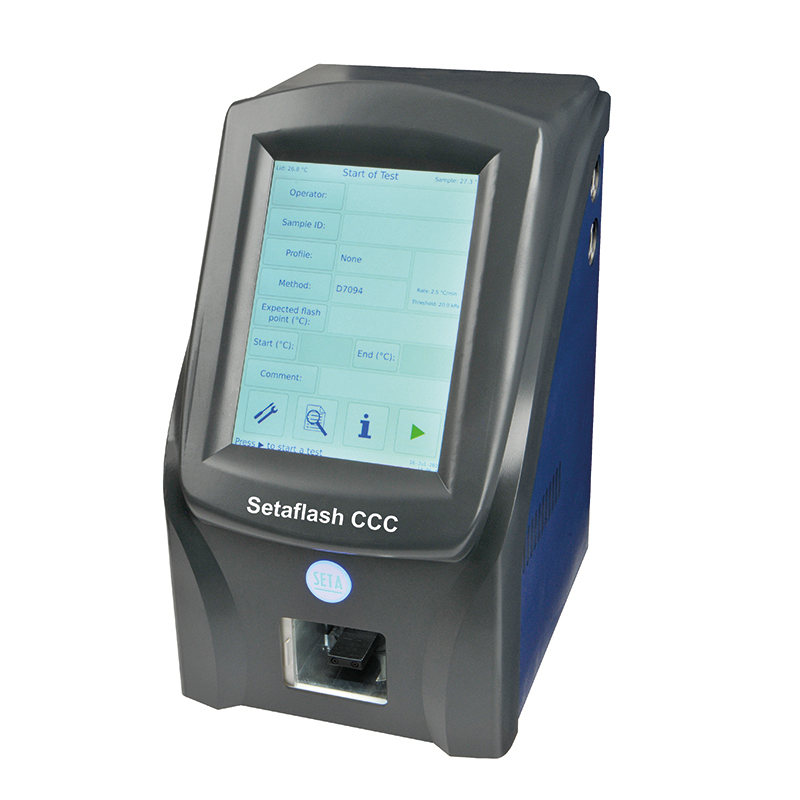
The Setaflash CCC Continuously Closed Cup Flash Point Tester, 35600-0 has been developed to support laboratories implementing ASTM D8606 while providing the benefits of modern Modified Continuously Closed Cup technology.
Key features include:
- Supports ASTM D8606 apparatus requirements
- Fully automated operation
- Approximately 2 mL sample volume
- Built-in automatic fire extinguisher
- Advanced software with intuitive touchscreen operation
- Innovative stirrer magnet detection
- Fast testing with excellent repeatability
Building on decades of Stanhope-Seta expertise in flash point measurement, the Setaflash CCC provides laboratories with a practical solution for implementing the latest liquid waste flash point testing methodology.
Learn more about the Setaflash CCC for ASTM D8606 flash point testing >
Preparing for ASTM D8606
Along with ASTM D8174 and ASTM D8175, the publication of ASTM D8606 provides laboratories with another recognised method specifically developed for determining the finite flash point of liquid wastes using Modified Continuously Closed Cup technology.
For organisations involved in waste analysis, environmental testing or hazardous material characterisation, adopting ASTM D8606 offers a modern approach to flash point testing that combines improved laboratory safety, efficient operation and reliable results.
As laboratories review their flash point testing capabilities, the Setaflash CCC provides a straightforward route to implementing ASTM D8606 while benefiting from the latest developments in continuously closed cup flash point technology.
Choosing the right flash point testing solution
ASTM D8606 represents an important addition to the range of recognised flash point test methods available for waste analysis, providing laboratories with a modern Modified Continuously Closed Cup (MCCCFP) approach for determining the finite flash point of liquid wastes. However, as with all flash point testing, selecting the appropriate instrument begins with understanding the method or regulation your laboratory is required to follow.
Whether your application requires ASTM D8606, ASTM D8174, ASTM D8175 or another recognised standard, Stanhope-Seta offers a range of flash point testing solutions to support laboratories across waste management, environmental testing and hazardous materials analysis.
| Type of waste | ASTM D8174 (Small Scale) | ASTM D8175 (Pensky-Martens) | ASTM D8606 (MCCCFP) |
| Single-phase | Yes | Yes | Yes |
| Multi-phase | Yes | Yes | Yes |
| Forms surface film | Yes** | Yes | No |
| Corrosive | Yes* | No | Yes* |
| Halogenated | Yes | Yes | No |
| Organic peroxides | Yes | No | No |
*Recommends stainless steel cup
**For corrosive surface film forming samples
Explore our full range of flash point testers or contact our technical team to discuss the most suitable solution for your application >
Frequently Asked Questions about ASTM D8606
What is ASTM D8606?
ASTM D8606 is the Standard Test Method for Finite Flash Point Determination of Liquid Wastes by Modified Continuously Closed Cup Flash Point (MCCCFP) Tester. It provides a recognised procedure for determining the flash point of liquid wastes over a temperature range of –25 °C to 90 °C using a continuously closed cup design, electric arc ignition and automatic flash point detection.
What types of samples can be tested using ASTM D8606?
ASTM D8606 is intended for the flash point testing of liquid wastes, including waste solvents, chemical manufacturing residues, contaminated fuels, industrial process wastes, recovered liquids and other combustible waste streams. The method is designed to accommodate complex samples with unknown or variable compositions.
How does ASTM D8606 differ from ASTM D8174 and ASTM D8175?
ASTM D8174 and ASTM D8175 were published specifically for testing complex liquid wastes using Small Scale Closed Cup and Pensky-Martens apparatus respectively. ASTM D8606 introduces an additional recognised method using Modified Continuously Closed Cup Flash Point (MCCCFP) technology. The appropriate method should always be selected according to the applicable regulation, product specification or customer requirement.
Does ASTM D8606 replace existing flash point test methods?
No. ASTM D8606 expands the range of recognised flash point test methods available for liquid waste analysis but does not replace ASTM D8174, ASTM D8175 or other recognised methods. Laboratories should use the test method specified by the relevant regulation or product specification.
What are the advantages of Modified Continuously Closed Cup (MCCCFP) flash point testing?
MCCCFP technology offers several advantages for liquid waste testing, including a small sample volume (2 mL), a continuously closed test chamber, automatic flash point detection, reduced operator exposure to flammable vapours and fast automated testing. These features help improve laboratory safety, efficiency and repeatability.
Which Stanhope-Seta instrument supports ASTM D8606?
The Setaflash CCC supports ASTM D8606 apparatus requirements and provides a fully automated solution for Modified Continuously Closed Cup flash point testing. For laboratories carrying out hazardous waste classification and transportation testing to ASTM D8174 or related methods, the Setaflash Small Scale Closed Cup remains the appropriate solution.
Why is flash point testing important for liquid waste?
Flash point testing helps determine the temperature at which a liquid waste produces enough vapour to ignite. This information supports safe storage, transportation, handling and waste management, while helping laboratories assess fire hazards and comply with applicable regulations and testing standards.