
Understanding ASTM D8073 Water Separation Testing for Aviation Fuels
ASTM D8073 water separation testing provides a reliable, automated method for determining the water separation characteristics of aviation turbine fuels. The method is recognised by major aviation fuel specifications and industry guidance, helping laboratories improve repeatability while maintaining compliance with current fuel quality requirements.
Maintaining the water separation characteristics of aviation turbine fuels is essential for protecting aircraft fuel systems and ensuring safe operation. Water separation testing helps verify that aviation fuels can effectively separate free water, reducing the risk of filter plugging, corrosion and other operational issues.
The Seta Water Separation Instrument (WSI) Analyser SA9000-0 provides fully automated determination of the water separation characteristics of aviation turbine fuels in accordance with ASTM D8073, helping laboratories improve repeatability, reduce operator intervention and simplify routine testing.
ASTM D8073 and industry adoption
ASTM D8073 has become an increasingly important method for determining the water separation characteristics of aviation turbine fuels. The automated method has gained widespread industry recognition and is referenced within key aviation fuel specifications and guidance.
Notably, DEF STAN 91-091 includes ASTM D8073 within Table 5 as an alternative to ASTM D3948 for the measurement of water separation in aviation turbine fuels at the point of manufacture.
Industry guidance has also evolved with the publication of JIG Bulletin 150, which confirms that:
- ASTM D8073 is the preferred method for testing fuels containing a Static Dissipator Additive (SDA) downstream of the point of manufacture
- For fuels containing an SDA, ASTM D8073 is the preferred method and ASTM D7224 is not recommended
These developments reflect the industry’s continued move towards automated, repeatable water separation testing methods that deliver greater confidence in fuel quality assessment.
Why Water Separation testing matters
Water contamination remains one of the most significant quality concerns within aviation fuels. Effective water separation helps ensure free water can be removed before fuel reaches an aircraft, protecting fuel system components and supporting reliable operation.
Routine water separation testing helps laboratories verify fuel quality throughout the supply chain, from production through to distribution.
As Sustainable Aviation Fuel (SAF) becomes increasingly common within aviation fuel blends, reliable water separation testing continues to play an important role in maintaining compliance with international fuel specifications.
Why laboratories are moving to ASTM D8073
Compared with traditional manual methods, ASTM D8073 provides a fully automated approach to water separation testing.
Key advantages include:
- Improved repeatability through reduced operator influence
- Automated test execution for greater consistency
- Reduced manual handling
- Faster routine testing
- Increased confidence in test results
- Preferred method for fuels containing Static Dissipator Additives (SDA)
For laboratories seeking to improve efficiency while maintaining compliance with current industry guidance, ASTM D8073 offers a modern solution for routine aviation fuel testing.
The Seta WSI Analyser SA9000-0
The Seta Water Separation Instrument (WSI) Analyser SA9000-0 has been developed specifically to perform fully automated ASTM D8073 testing.
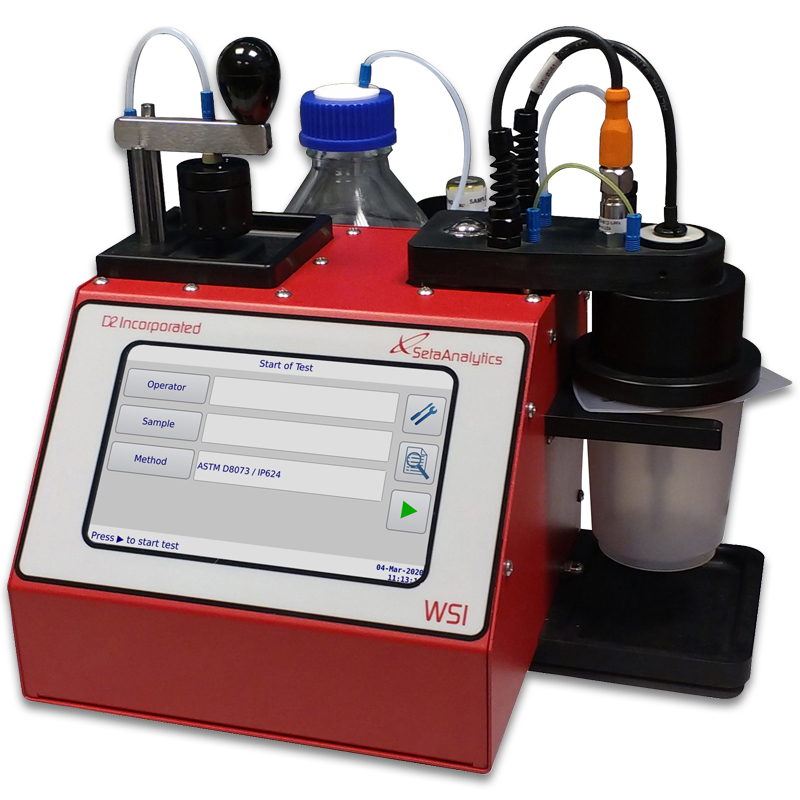
Designed for routine laboratory use, the instrument combines automation with intuitive operation to deliver reliable, repeatable results while reducing operator workload.
Key Features
- Fully automated ASTM D8073 testing
- Simple touchscreen operation
- Improved test repeatability through automated operation
- Reduced operator intervention
- Comprehensive test data recording
- Fast, efficient routine analysis
- Suitable for Jet A and Jet A-1 aviation turbine fuels
By automating the complete test procedure, the Seta WSI helps laboratories achieve consistent results while improving laboratory productivity.
Supporting Aviation Fuel quality
Water separation testing is one part of a comprehensive aviation fuel quality programme. Alongside parameters such as flash point, freezing point, density and particulate contamination, water separation testing helps ensure aviation fuels continue to meet demanding international quality standards.
Stanhope-Seta supports laboratories worldwide with specialist instruments for aviation fuel testing, providing solutions that help improve laboratory efficiency while maintaining compliance with recognised international test methods.
Learn more
To learn more about the Seta Water Separation Instrument (WSI) Analyser SA9000-0, visit the product page or contact our technical team to discuss your application, arrange a demonstration or request a quotation.
Frequently Asked Questions about ASTM D8073 Water Separation testing
What is ASTM D8073?
ASTM D8073 is the standard test method for determining the water separation characteristics of aviation turbine fuels using a Water Separation Instrument (WSI). The automated method helps laboratories assess a fuel’s ability to separate water, providing improved repeatability and reduced operator influence compared with traditional manual testing methods.
Why is water separation testing important for aviation fuels?
Water contamination can affect fuel quality and aircraft fuel system performance. Water separation testing helps verify that aviation turbine fuels can effectively separate free water before use, supporting fuel quality control throughout production, distribution and storage.
Why is ASTM D8073 preferred for fuels containing Static Dissipator Additives (SDA)?
JIG Bulletin 150 recommends ASTM D8073 as the preferred method for testing aviation turbine fuels containing Static Dissipator Additives (SDA) downstream of the point of manufacture. The bulletin also states that ASTM D7224 is not recommended for fuels containing SDA.
How does ASTM D8073 differ from ASTM D3948?
Both methods measure the water separation characteristics of aviation turbine fuels. However, ASTM D8073 uses a fully automated Water Separation Instrument, reducing operator variability and improving repeatability. DEF STAN 91-091 includes ASTM D8073 as an alternative to ASTM D3948 for testing at the point of manufacture.
Which aviation fuel specifications reference ASTM D8073?
ASTM D8073 is referenced within several important aviation fuel standards and industry documents, including DEF STAN 91-091. It is also recognised within Joint Inspection Group (JIG) guidance for the testing of aviation fuels containing Static Dissipator Additives (SDA).
Can ASTM D8073 be used for Sustainable Aviation Fuel (SAF)?
Yes. As Sustainable Aviation Fuel (SAF) becomes increasingly incorporated into aviation fuel blends, reliable water separation testing remains an important part of fuel quality control. ASTM D8073 provides laboratories with an automated and repeatable method for assessing water separation performance in accordance with current industry requirements.
What are the advantages of automated ASTM D8073 testing?
Automated ASTM D8073 testing offers several benefits for routine laboratory analysis, including:
- Improved repeatability
- Reduced operator intervention
- Faster, more consistent testing
- Simplified routine operation
- Lower risk of operator error
- Improved laboratory efficiency
What is the Seta Water Separation Instrument (WSI) Analyser?
The Seta Water Separation Instrument (WSI) Analyser SA9000-0 is Stanhope-Seta’s fully automated instrument for performing ASTM D8073 water separation testing. Designed for routine aviation fuel quality control, it combines automated operation with intuitive software to deliver reliable, repeatable results while reducing laboratory workload.
Why choose the Seta WSI Analyser?
The Seta WSI Analyser has been developed to simplify ASTM D8073 testing by combining automated operation with practical laboratory features, including:
- Fully automated ASTM D8073 testing
- Improved test repeatability
- Simple touchscreen operation
- Comprehensive data recording
- Reduced operator intervention
It provides laboratories with an efficient solution for routine water separation testing while supporting compliance with recognised aviation fuel test methods.