

Flash point testing is a laboratory test used to determine the lowest temperature at which a liquid or semi-liquid sample produces enough vapour to ignite when exposed to an ignition source under controlled test conditions.
The result, known as the flash point, is one of the most important safety properties for fuels, solvents, chemicals, lubricants, waste materials, cosmetics, fragrances, pharmaceuticals and many other products. It is used to assess fire risk, classify hazardous materials, support transport and storage decisions and confirm that products meet relevant quality and regulatory requirements.
Stanhope-Seta flash point testers are used by laboratories worldwide for routine quality control, product development, regulatory compliance and safety testing across a wide range of industries.
What does flash point mean?
Flash point is the lowest temperature at which vapours from a sample form an ignitable mixture with air and momentarily “flash” when an ignition source is applied.
It is important to understand that flash point is not the temperature at which the liquid itself catches fire. Liquids do not burn directly; it is the vapour above the liquid that ignites. A liquid with a low flash point can produce flammable vapours at relatively low temperatures, which can make it more hazardous during handling, storage, processing or transportation.
Flash point is usually reported in degrees Celsius or Fahrenheit and must be determined using a specified test method. Results from different flash point methods are not always directly interchangeable, so the correct method should be selected according to the sample type, product specification or regulatory requirement.
How does flash point testing work?
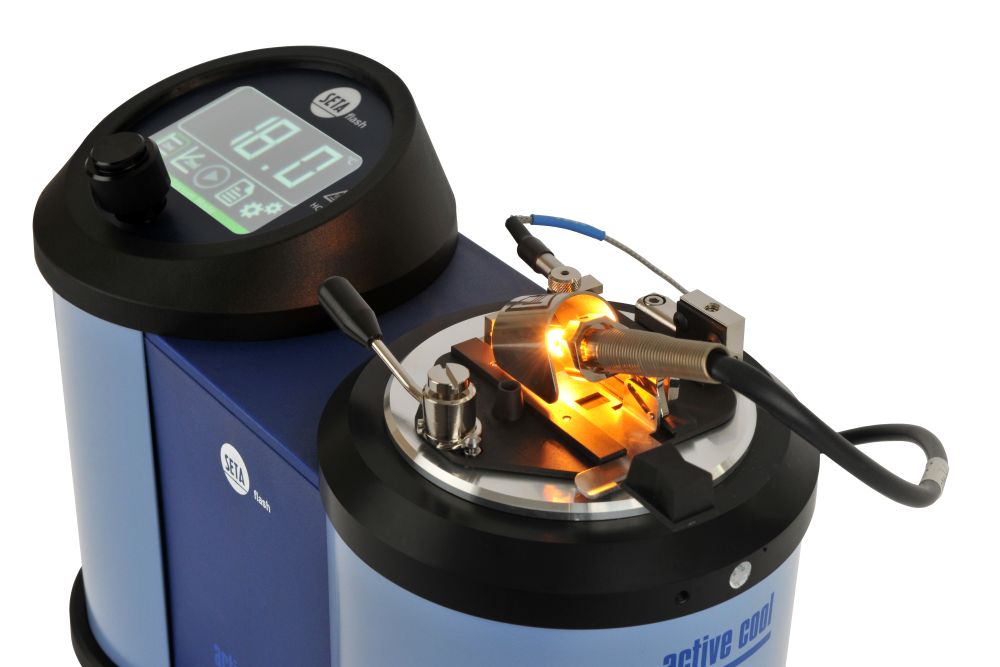
In a flash point test, a measured volume of sample is placed into a test cup and heated under controlled conditions. At specified temperature intervals, an ignition source is introduced. The test records the temperature at which the vapour above the sample briefly ignites.
The exact procedure depends on the test method being used. Different methods define factors such as:
- sample volume
- heating rate
- test cup design
- open cup or closed cup conditions
- ignition source
- stirring requirements
- temperature intervals
- barometric pressure correction
- flash detection method
Because many variables can affect the result, flash point testing must be carried out under standardised conditions. This is why international test methods are used to ensure repeatable and comparable results between laboratories.
Why is flash point testing important?
Flash point testing helps laboratories and manufacturers understand the flammability hazard of a material. This information is essential for protecting people, facilities, supply chains and the environment.
Flash point results are commonly used for:
- classifying flammable and combustible materials
- transport and dangerous goods classification
- storage and handling decisions
- safety data sheet information
- process safety assessments
- product quality control
- contamination checks
- waste classification
- regulatory compliance
- product development
For example, a lower than expected flash point may indicate contamination with a more volatile or flammable substance. In petroleum products, a reduced flash point can suggest fuel dilution or cross-contamination. In waste management, flash point testing can help determine whether a material should be classified as hazardous and how it should be handled or disposed of.
Flash point and regulatory classification
Flash point is widely used in regulations for classifying flammable liquids. Under CLP/GHS-style classification systems, flash point can help determine whether a substance or mixture falls into a flammable liquid hazard category.
In many cases, classification is not based on flash point alone. Other properties, such as initial boiling point, chemical composition and the relevant regulatory framework, may also be required. This is why laboratories must use the appropriate test method and interpret results against the correct standard or regulation.
Typical regulatory and safety areas where flash point data may be required include:
- Classification, Labelling and Packaging requirements
- transport of dangerous goods
- aviation and marine transport requirements
- workplace safety assessments
- waste acceptance and disposal decisions
- product safety documentation
- quality and release testing
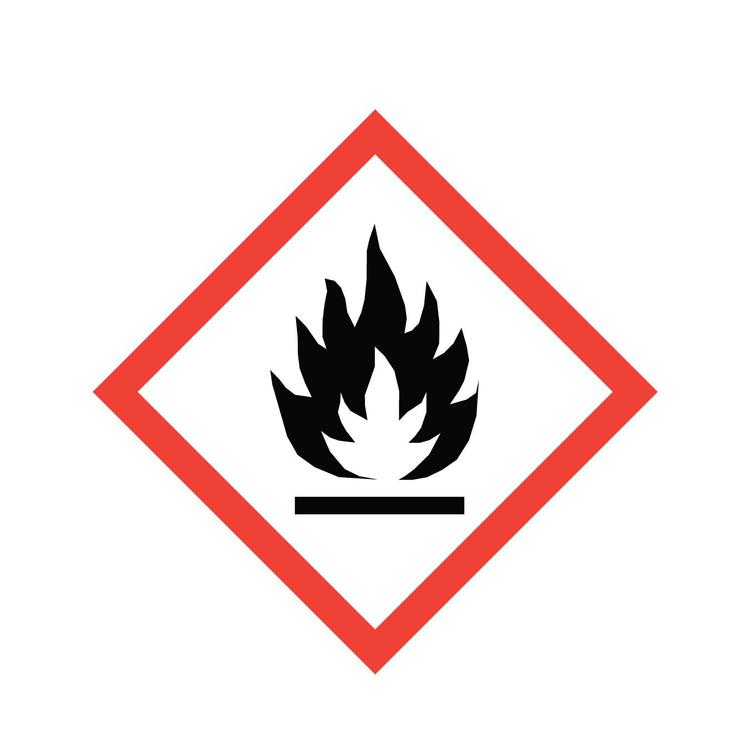
Accurate flash point testing helps ensure that materials are labelled, stored, transported and handled correctly.
Open cup vs closed cup flash point testing
Flash point tests are generally divided into two main types: open cup and closed cup.
Open cup
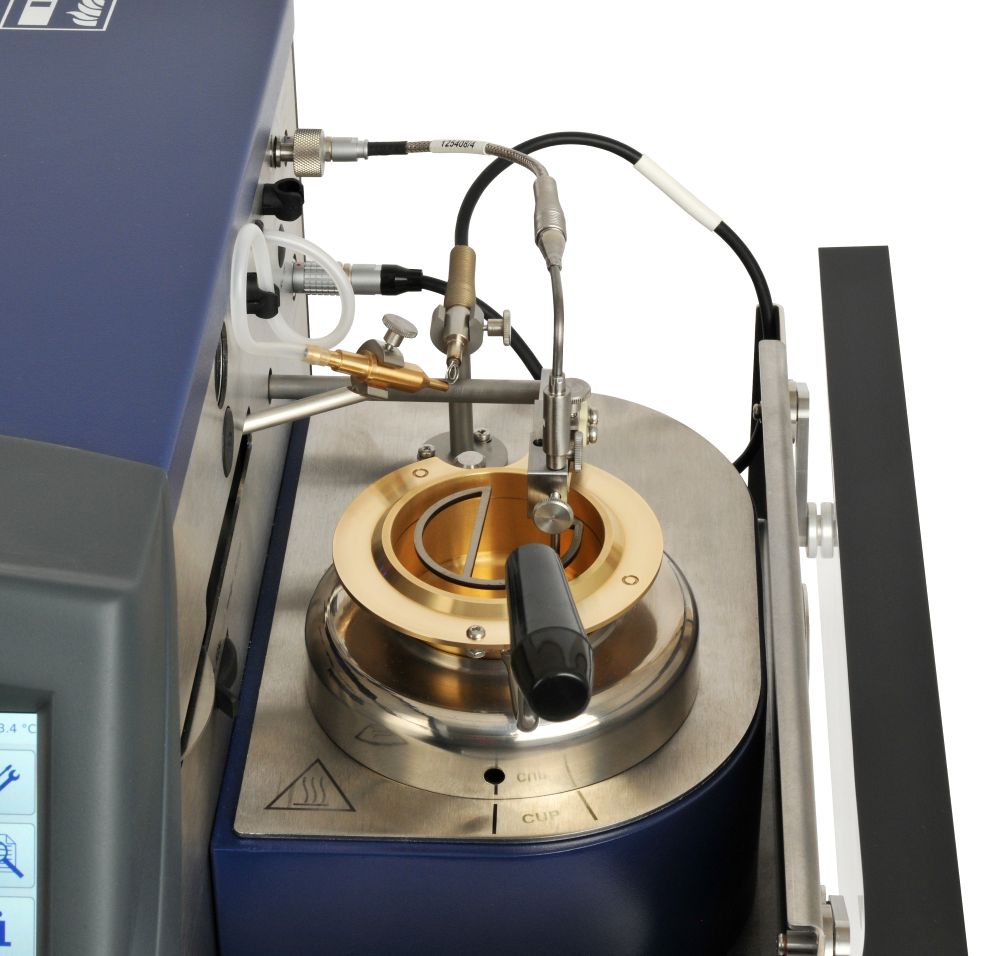
Open cup flash point tests are carried out with the sample exposed to the surrounding atmosphere. These methods are often used for products such as lubricants, bitumen and materials where open-air conditions are specified by the relevant test method. The choice between open cup and closed cup testing depends on the product, industry, specification and reason for testing.
Closed cup
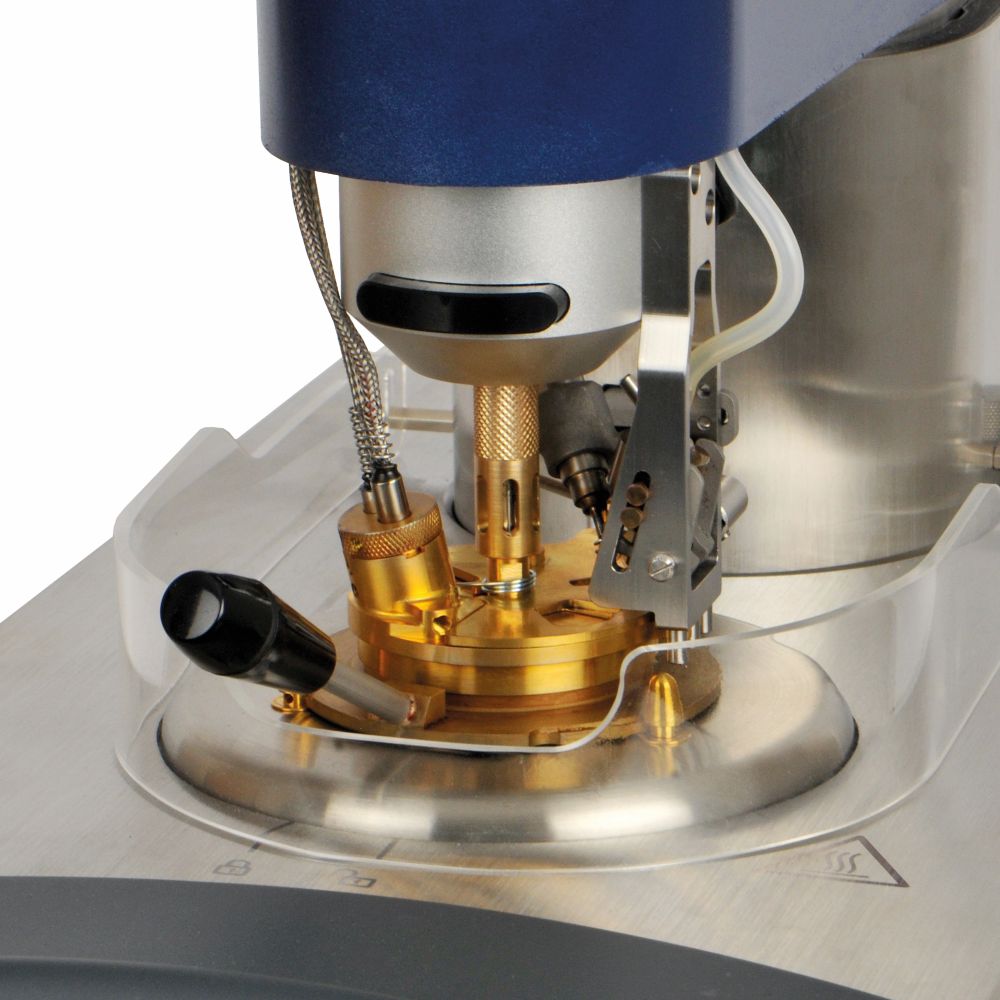
Closed cup flash point tests are carried out in a sealed or enclosed test cup. This allows vapours to accumulate above the sample before the ignition source is applied. Closed cup methods often give lower flash point results than open cup methods and are widely used for fuels, solvents, chemicals and regulatory classification.
Flash point vs fire point
Flash point and fire point are related, but they are not the same.
Flash point is the temperature at which vapours ignite momentarily when an ignition source is applied. Fire point is the temperature at which the vapours continue to burn for a sustained period.
The fire point is usually higher than the flash point. Flash point is more commonly used for hazard classification, transport, storage and quality control because it identifies the point at which a material first presents an ignition risk under defined conditions.
What affects flash point test results?
Flash point results can be affected by both the sample itself and the test conditions. For reliable results, laboratories need to control the test method carefully and ensure the instrument is suitable for the sample being tested.
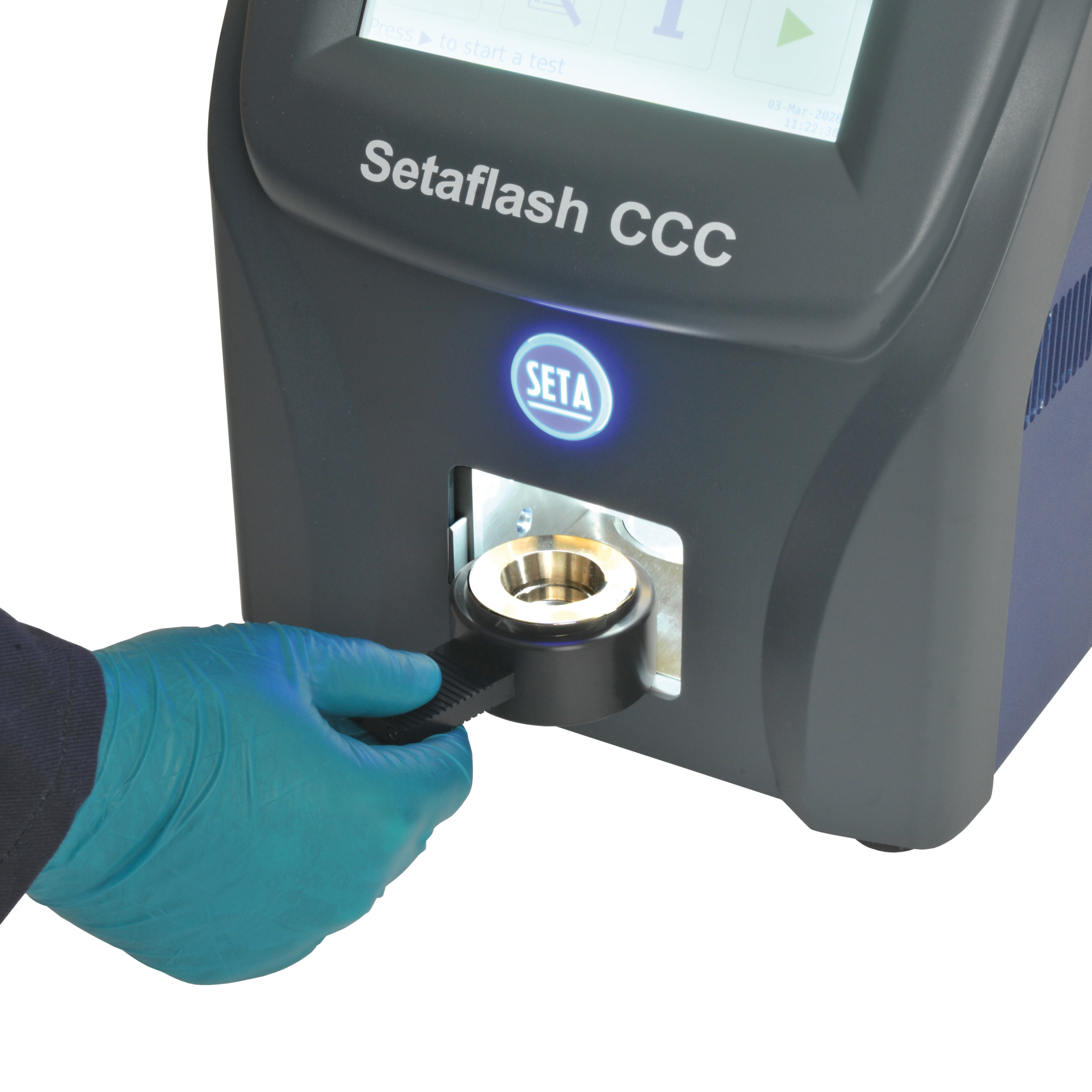
Factors that can influence flash point include:
- sample composition
- presence of volatile contaminants
- heating rate
- test cup design
- open or closed cup conditions
- ignition source position
- stirring
- sample size
- atmospheric pressure
- cleanliness of the test cup
- operator technique
- instrument calibration and verification
Even a small amount of volatile contamination can significantly reduce the measured flash point. This makes flash point testing a valuable tool for detecting product contamination, checking batch consistency and investigating unexpected changes in material behaviour.
Which industries use flash point testing?
Flash point testing is used wherever liquids or semi-liquids may present a flammability risk or require classification.
Common industries and applications include:
Petroleum, fuels and oils
Flash point testing is used for petrol, diesel, fuel oils, biodiesel, sustainable aviation fuel, crude oil, lubricants and related petroleum products. It supports product specifications, quality control, contamination checks and transport classification.
Chemicals and solvents
Solvents, coatings, resins, inks, adhesives and chemical intermediates often require flash point data for safety data sheets, formulation control, storage and transport.
Waste and environmental testing
Waste laboratories use flash point testing to help classify waste materials and determine suitable handling, treatment, storage and disposal routes.
Cosmetics, fragrances and pharmaceuticals
Products and ingredients containing alcohols, solvents or volatile components may require flash point testing to support safety assessment, quality control and transport requirements.
Manufacturing and process industries
Flash point data helps manufacturers assess fire hazards during production, filling, packaging, storage and distribution.
Explore all flash point test applications >
Which flash point test method should be used?
The correct flash point test method depends on the sample, expected flash point range, regulatory requirement and product specification. Common flash point methods include:
Some methods are better suited to fuels and oils, while others are designed for small sample volumes, volatile materials, chemicals, paints, solvents or waste samples. Where a product specification or regulation states a method, that method should be followed.
Find out how to choose the correct flash point test method >
Choosing a flash point tester
When selecting a flash point tester, the required method is usually the first consideration. However, laboratories should also think about sample type, workload, safety, automation and long-term support.
Important factors include:
- required test methods and standards
- expected flash point range
- sample volume available
- open cup or closed cup testing
- manual, semi-automatic or automatic operation
- throughput and turnaround time
- operator safety
- ease of cleaning
- instrument verification
- data recording and reporting
- service and technical support
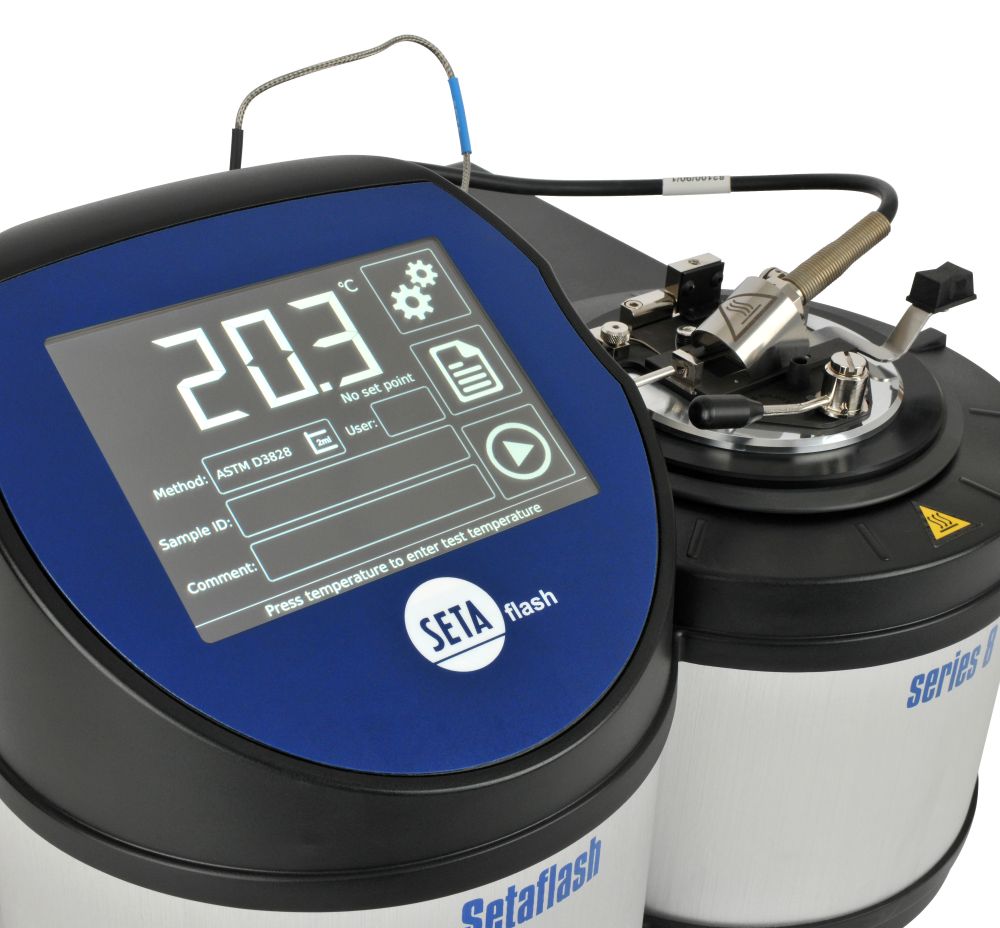
Stanhope-Seta offers a wide range of flash point testing instruments, including solutions for routine quality control, small-scale testing, automated testing and specialist applications.
Why choose Stanhope-Seta flash point testing instruments?
For more than 80 years, Stanhope-Seta has been developing laboratory instruments used by testing laboratories, refineries, fuel producers, chemical manufacturers and research organisations around the world. We are at the forefront of companies supplying technical support and standardisation involvement.
Our flash point testing portfolio supports a wide range of international test methods, from routine quality control through to research and specialist applications, helping laboratories achieve reliable, repeatable and compliant results.
Global benchmark in laboratory instruments for quality control
Solutions aligned with ASTM, IP, ISO, CEN and DEF STAN requirements
ISO 17034 Certified Reference Materials
Designed and manufactured in the UK with worldwide support
Flash Point Testing Frequently Asked Questions
What is flash point testing in simple terms?
Flash point testing measures the lowest temperature at which vapour from a liquid can briefly ignite when exposed to an ignition source. It is used to assess flammability risk and support safe handling, storage and transport.
Why do laboratories test flash point?
Laboratories test flash point to classify materials, comply with regulations, check product quality, detect contamination and assess fire hazards.
Is a lower flash point more dangerous?
In general, a lower flash point means a material can produce ignitable vapours at a lower temperature, which can increase the fire risk during normal handling or storage.
Does flash point mean a liquid is burning?
No. Flash point refers to vapour ignition, not the liquid itself burning. The vapour above the liquid briefly ignites when exposed to an ignition source.
Can flash point indicate contamination?
Yes. A lower-than-expected flash point may indicate contamination with a more volatile or flammable substance. This is why flash point testing is often used in quality control and investigation work
Is closed cup flash point the same as open cup flash point?
No. Closed cup and open cup methods use different test conditions and can produce different results. Closed cup methods often produce lower flash point values because vapours are contained above the sample.
What is the difference between flash point and fire point?
Flash point is the temperature at which vapour ignites briefly. Fire point is the temperature at which combustion continues for a sustained period.
Do I need a specific flash point test method?
Yes. Flash point results should be generated using the method required by the relevant product specification, regulation, customer requirement or quality standard.